There is a wide range of hole punch tools, from simple rotary punch pliers and single drive punches to tools you can use in a press. At first glance they may all seem to do the same thing: make a hole. In practice, though, they differ in how you use them, in the shape and size of the hole and, above all, in which material they are made for.
Not every hole punch works on every material
When choosing a hole punch, start with the material. What works fine on leather may not work on waterproof webbing, and this is where one of the most common mistakes happens.
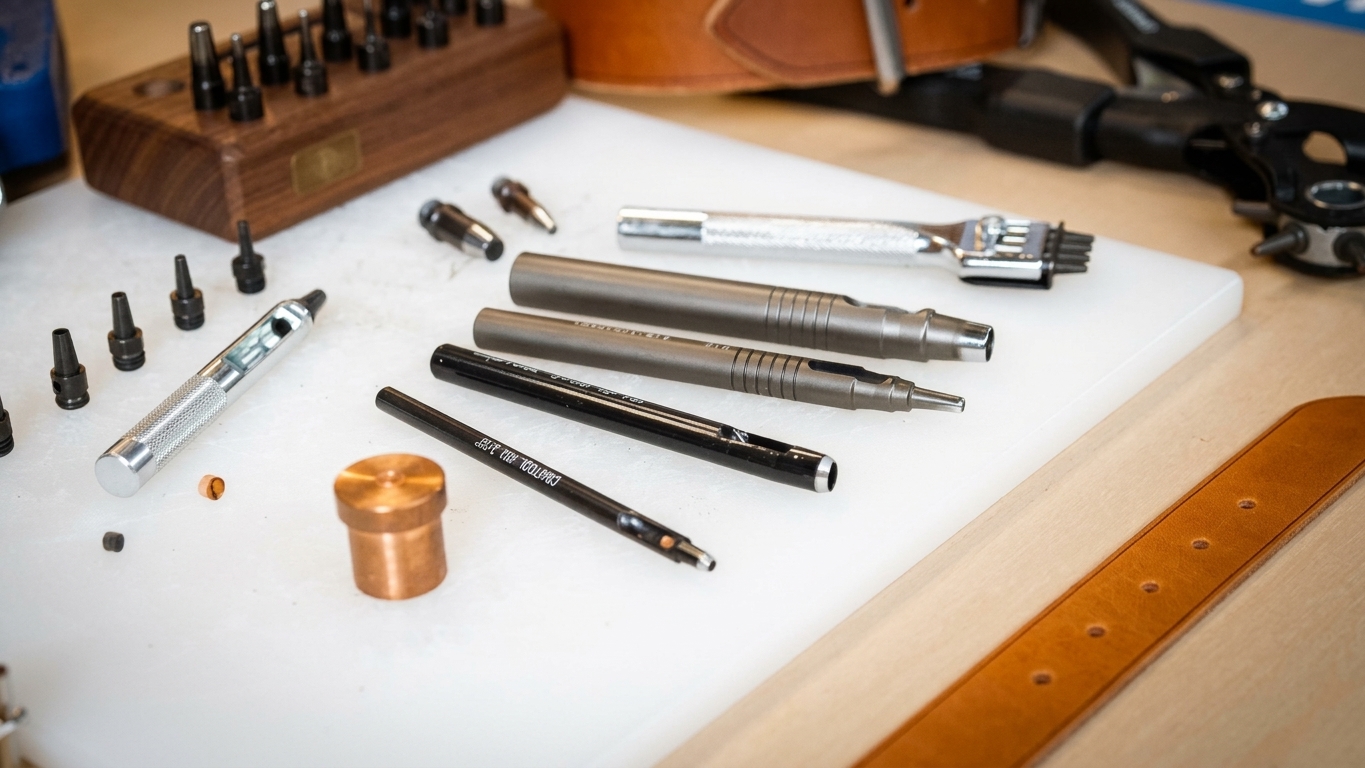
We do not recommend leather hole punches for waterproof webbing at all. This webbing has a textile reinforcement inside, and its fibers are so strong that they can damage the punch very quickly. Sometimes a single hole is enough for the punch to crack or for a piece of its cutting edge to chip off. So just because you managed to make a hole with it does not mean it is suitable for this material.
In standard textile webbing, holes are often made with heat, for example with a hot soldering iron that seals the material at the same time. You cannot use this method on waterproof webbing, so you need the right drive punch.
For our purposes, we can divide hole punch tools into two main groups:
Punching holes in waterproof webbing
For waterproof webbing, we use special drive punches made for this material. They come in different diameters depending on the hole you need: smaller ones for rivets, snap fasteners or ordinary holes in collars and straps, larger ones for grommets, for example.
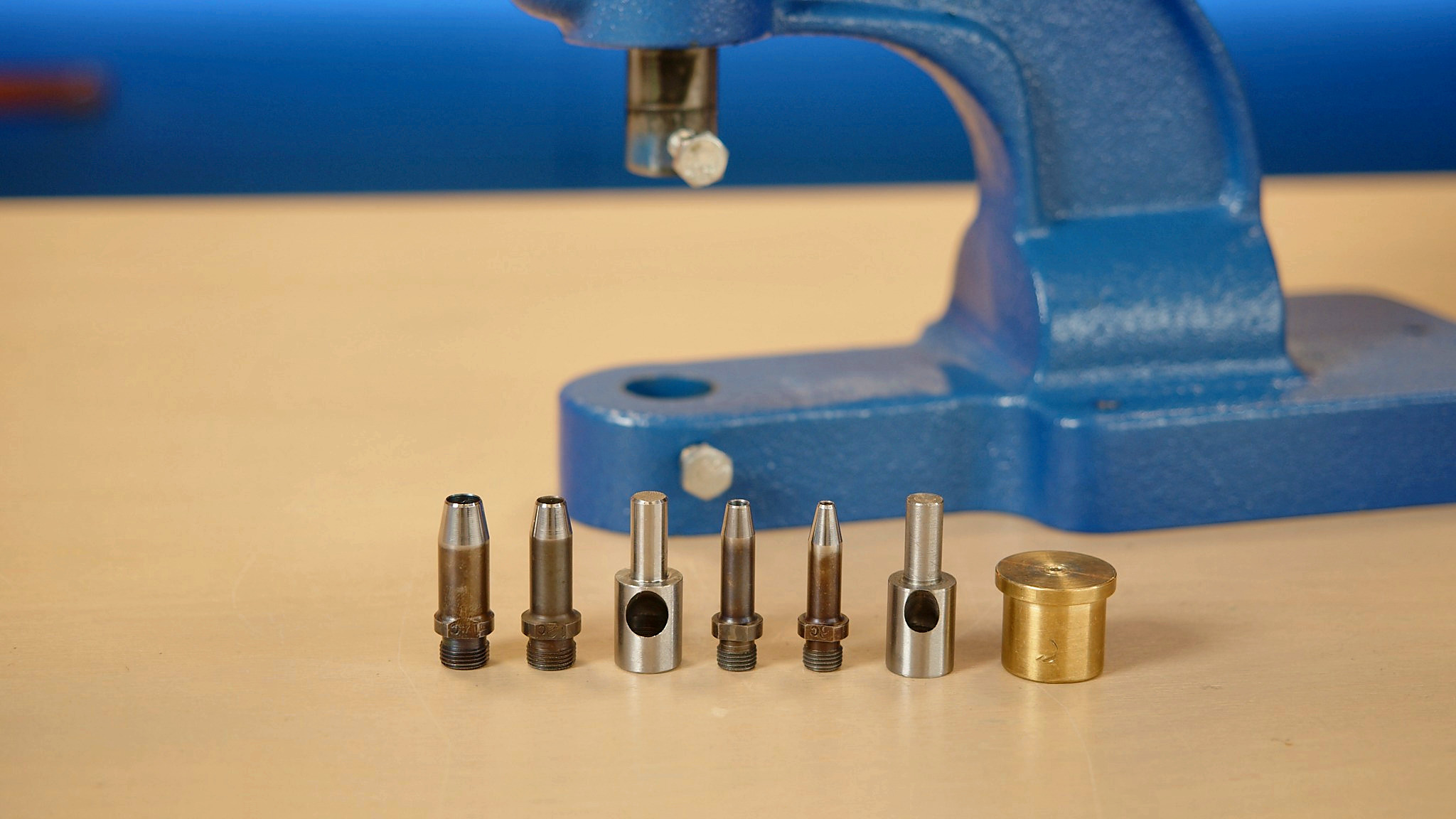
Depending on how you work, you can use the drive punches by hand with a matching steel handle (only for the 3 and 4 mm punches) or fit them into an adapter in a press.
Which drive punch should you choose?
For waterproof webbing, choose the drive punch mainly by the hole diameter you need. We offer four separate sizes, so pick the specific size according to what the hole is for, for example a rivet, a snap fastener, a hole in a collar or a grommet.
Which hole punch to use for rivets?
The recommended punch diameter depends on the post diameter of the specific rivet.
| Rivet type: | Recommended punch: |
|---|---|
| 20 Z, 66 Z, 63 Z, 70 Z 8mm, 70 Z, 70 Z 13mm | Punch ø 3 mm |
| 79 Z, 72 Z, 75 Z, 79 Z 15mm | Punch ø 4 mm |
Which hole punch to use for grommets?
The recommended punch diameter follows the hole diameter of the grommet.
| Grommet size: | Recommended punch: |
|---|---|
| ø 5.2 mm | Punch ø 5.2 mm |
| ø 6.0 mm | Punch ø 6 mm |
Do not use rotary punch pliers on waterproof webbing
Rotary punch pliers are tempting mainly because they offer several punch diameters in one tool. But they are not made for waterproof webbing. Their punch tubes are designed for leather, and the strong textile reinforcement inside waterproof webbing can damage or crack them. On waterproof webbing, always use a drive punch made specifically for this material.
Punching holes in leather
For leather, the choice of hole punch tools is much wider. You can use rotary punch pliers, single drive punches, complete sets and tools for special hole shapes. They differ in how you use them, the sizes available and how comfortable they are to work with.
Rotary punch pliers
Rotary punch pliers are among the simplest tools for punching leather. Their main advantage is that you have several hole diameters in one tool and you switch between sizes simply by turning the head of the pliers.
They are especially useful when you need a smaller number of holes and do not want to reach for a separate punch for each diameter. The individual types of pliers differ, however, in design, comfort and the force you need to punch.
Which rotary punch pliers should you choose?
Economy Rotary Punch is the basic and most affordable option. It offers six diameters from 1.9 to 4.7 mm and suits mainly thinner leather and occasional use. Its punch tubes are not replaceable.
Pro Rotary Punch also has six diameters, 1.9–4.7 mm, but it is sturdier and can also handle thicker leather. The punch tubes are replaceable, so when they wear out you do not have to replace the whole tool.
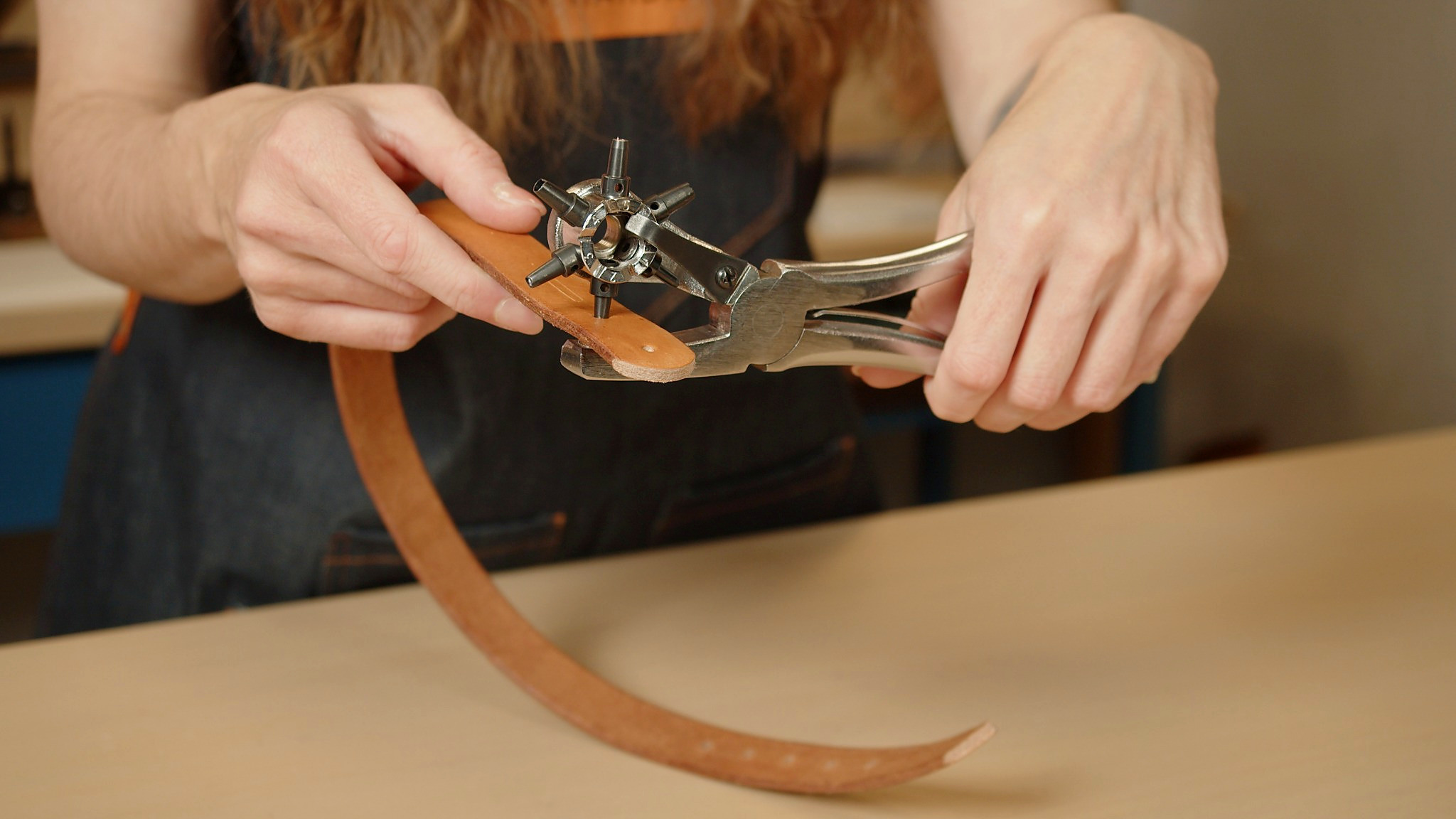
Sprenger Rotary Punch works with diameters of 2–4.5 mm and, unlike standard pliers, uses a lever mechanism. Thanks to it, you need less force to punch, which you will appreciate especially with thicker leather and larger diameters. Its punch tubes are also replaceable.
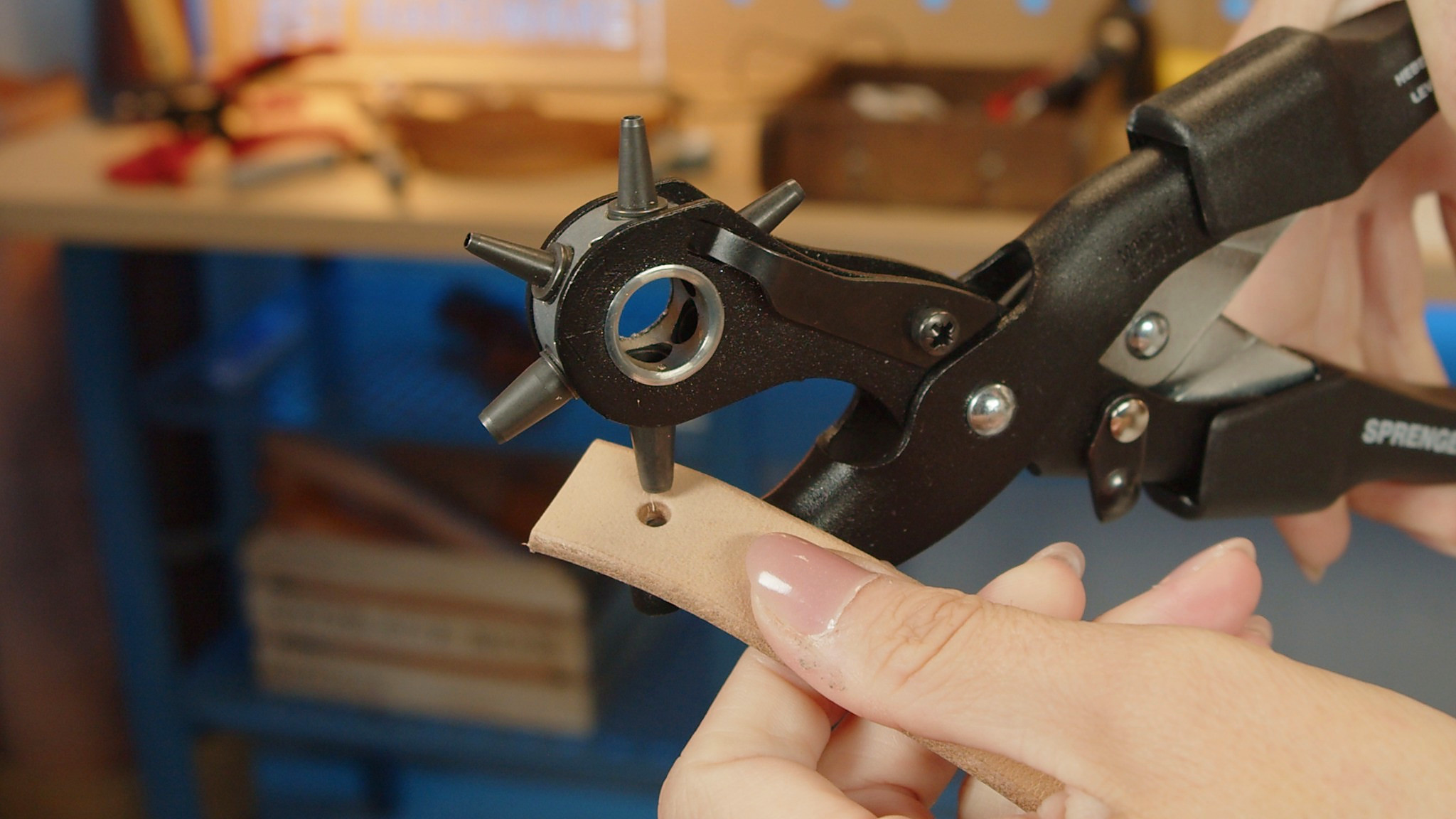
With all rotary punch pliers, keep in mind their limited reach from the edge of the material. If you need a hole further into the leather, single drive punches are more practical.
Single drive punches and punch sets
For hand work, you use single drive punches with a mallet and a cutting board. Unlike rotary punch pliers, they are not limited by the reach of the jaws, so you can make a hole practically anywhere on the material.
If you use several diameters, a complete set may be more practical. A single drive punch, on the other hand, makes sense when you often use one specific size.
Punch sets
For smaller holes there is the Mini Punch Set with diameters of 1.9–4.5 mm, while the Maxi Punch Set, 4.5–7.9 mm, covers larger diameters. A set with 2.5–10 mm offers an even wider range. With these sets, you work with one handle and change the punch tips as needed, so the set does not take up much space.
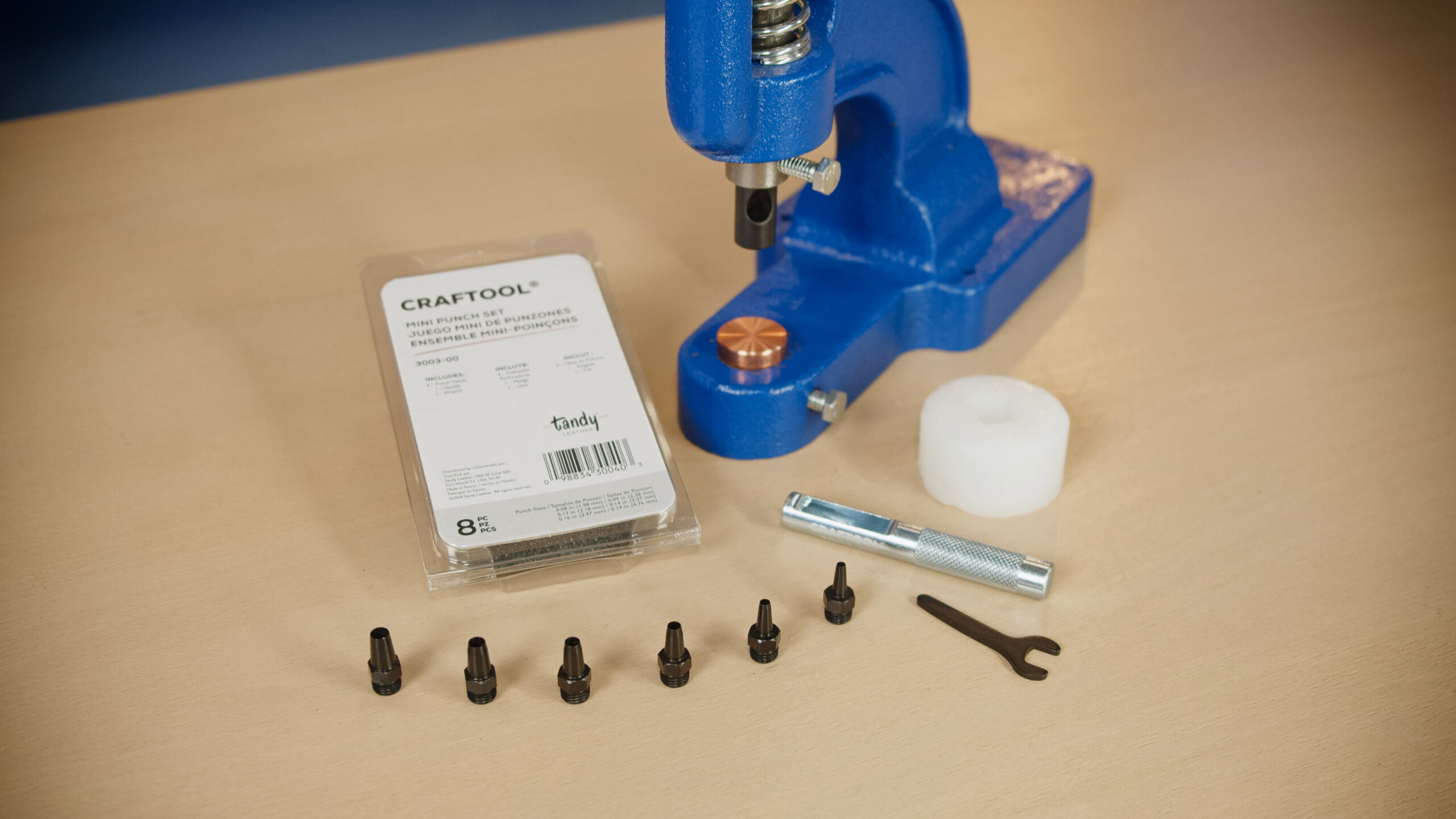
Kemovan punch sets are a group of their own. They are available, for example, in ranges of 1–5 mm and 1–10 mm, where each diameter has its own punch kept in a stand. The 1–6 mm version, by contrast, uses one handle with interchangeable punch tips.
So the choice depends not only on the diameters you need, but also on whether you prefer one handle with interchangeable punch tips or a separate punch for each size.
Single round drive punches
Single round drive punches make sense mainly when you often use one specific diameter. You do not have to change or swap anything: you pick up the right punch and can get straight to work.
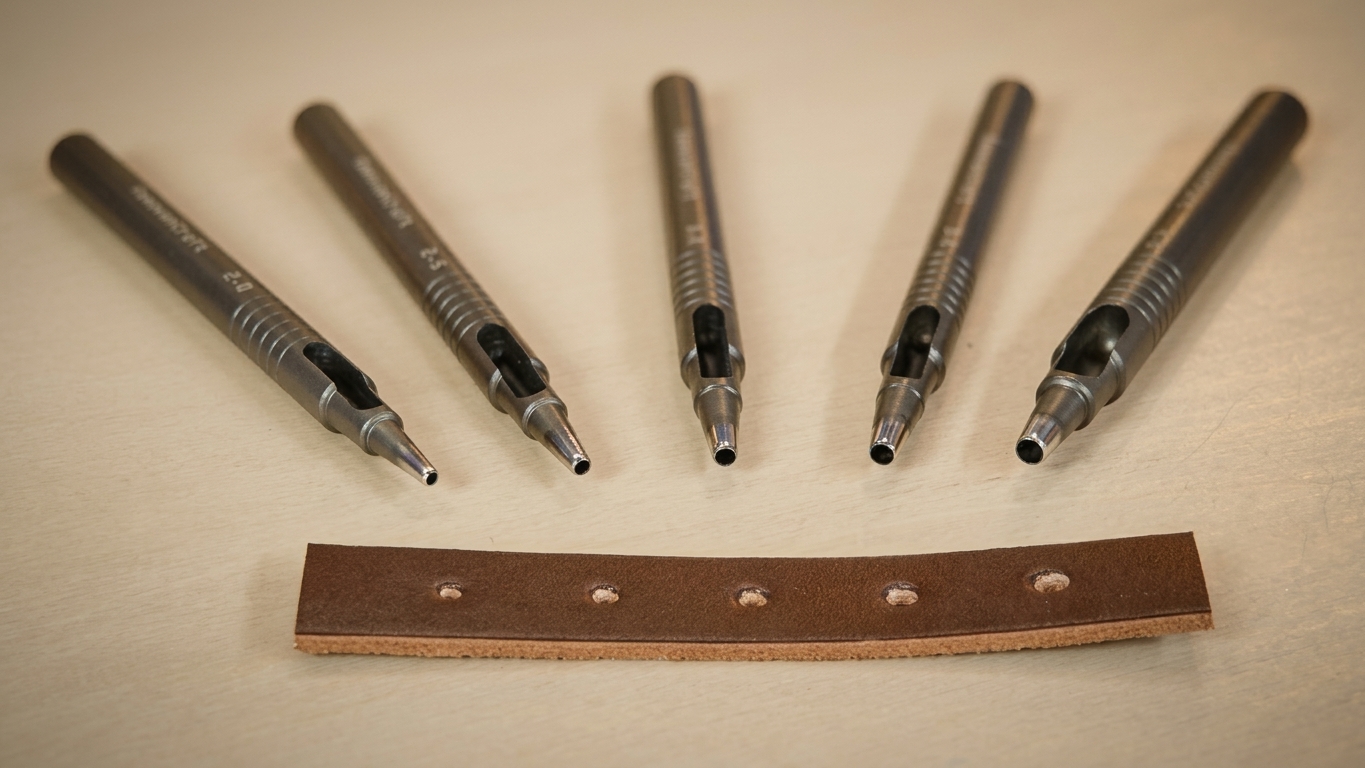
Another advantage is the wide range of sizes available. Standard round drive punches come in diameters from as small as 0.5 mm up to much larger holes of around 13 mm.
A step up are Kemovan round punches, suited especially to more frequent work. They have a polished inside, so offcuts get caught less, and a sturdier design overall. They are available in diameters of 1–10 mm.
Oval and special punches
Not every hole has to be round. Some fastenings or types of leatherwork need a different hole shape or several holes at once.
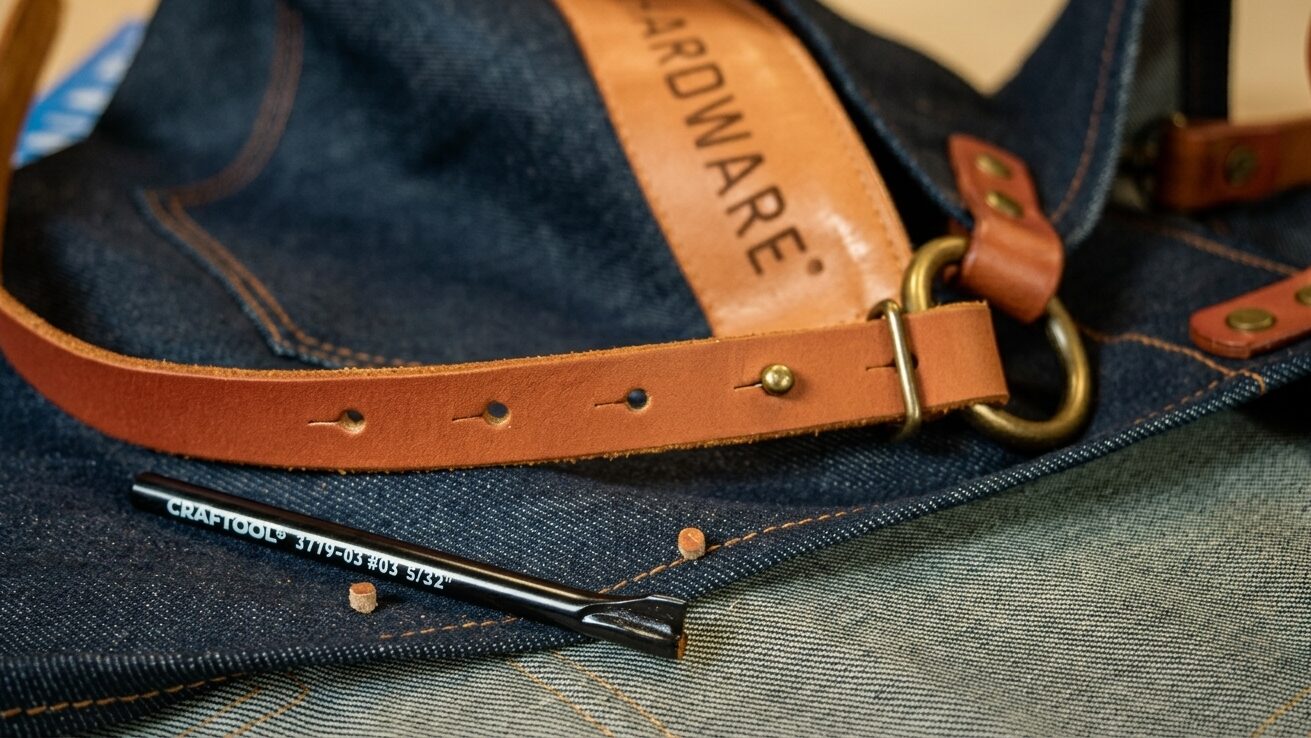
Oval drive punches make the holes the buckle prong goes into when you fasten it. Compared with a round hole, an oval shape gives the prong more room, and the buckle sits better when fastened. So it is not a punch for the slot where you attach the buckle, but a punch for the holes you use to fasten it every day.
A buttonhole punch makes a hole in exactly the shape this type of fastening needs, for example for a button stud. You do not need to trim or adjust the hole afterwards.
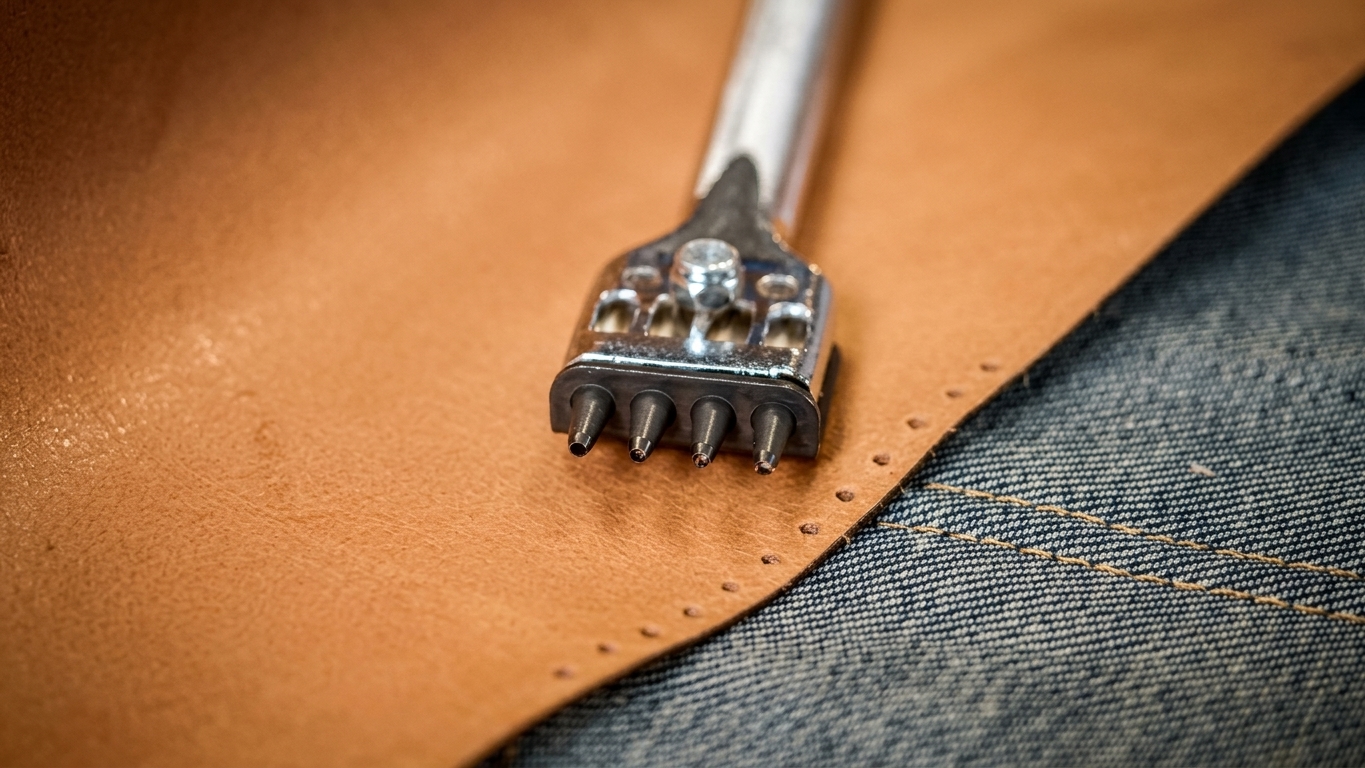
Another specialized tool is the 4-in-1 leather punch, which makes four evenly spaced holes for lacing with a single blow. It is made for thinner leather and helps you prepare several holes at once, so the work is faster and the spacing stays even.
Punching by hand or with a press?
Punching with a mallet and punching in a press are not methods reserved for a particular material. Depending on their design, many drive punches can be used both ways. This applies to drive punches for waterproof webbing and to some interchangeable punch tips for leather.
Punching by hand
For a smaller number of holes, punching by hand is very practical and often also the fastest. You place the punch on the spot you want and strike it with a mallet.
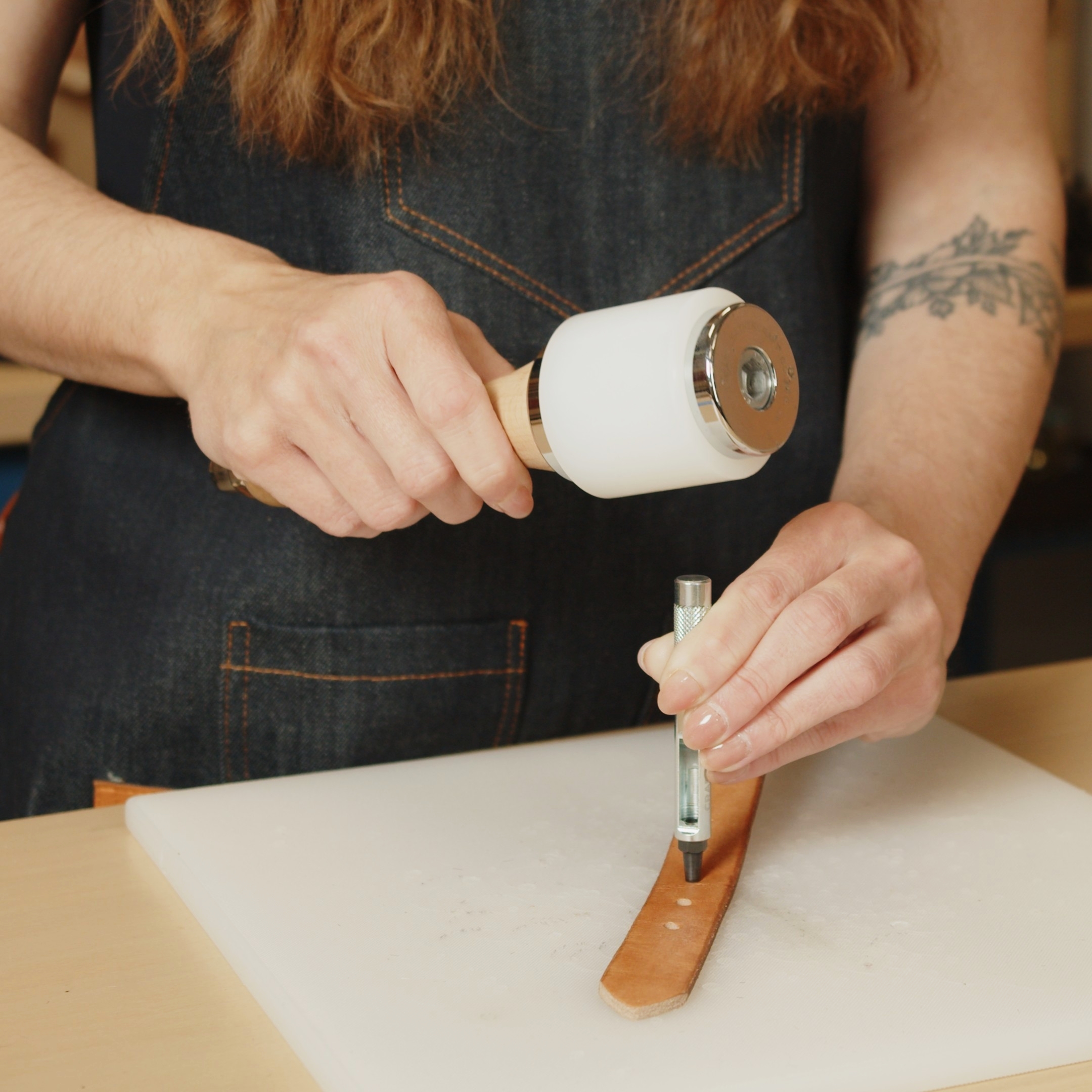
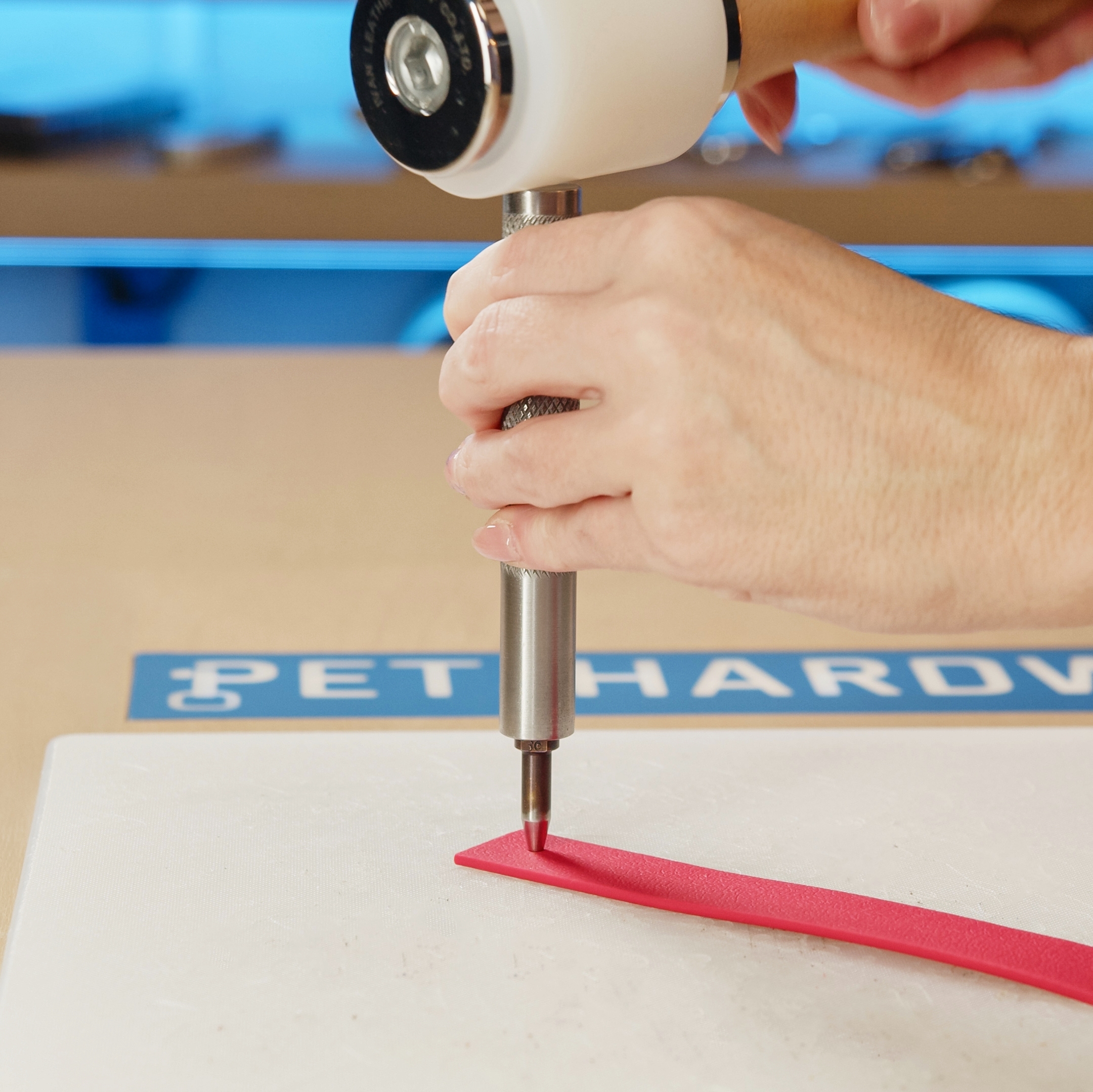
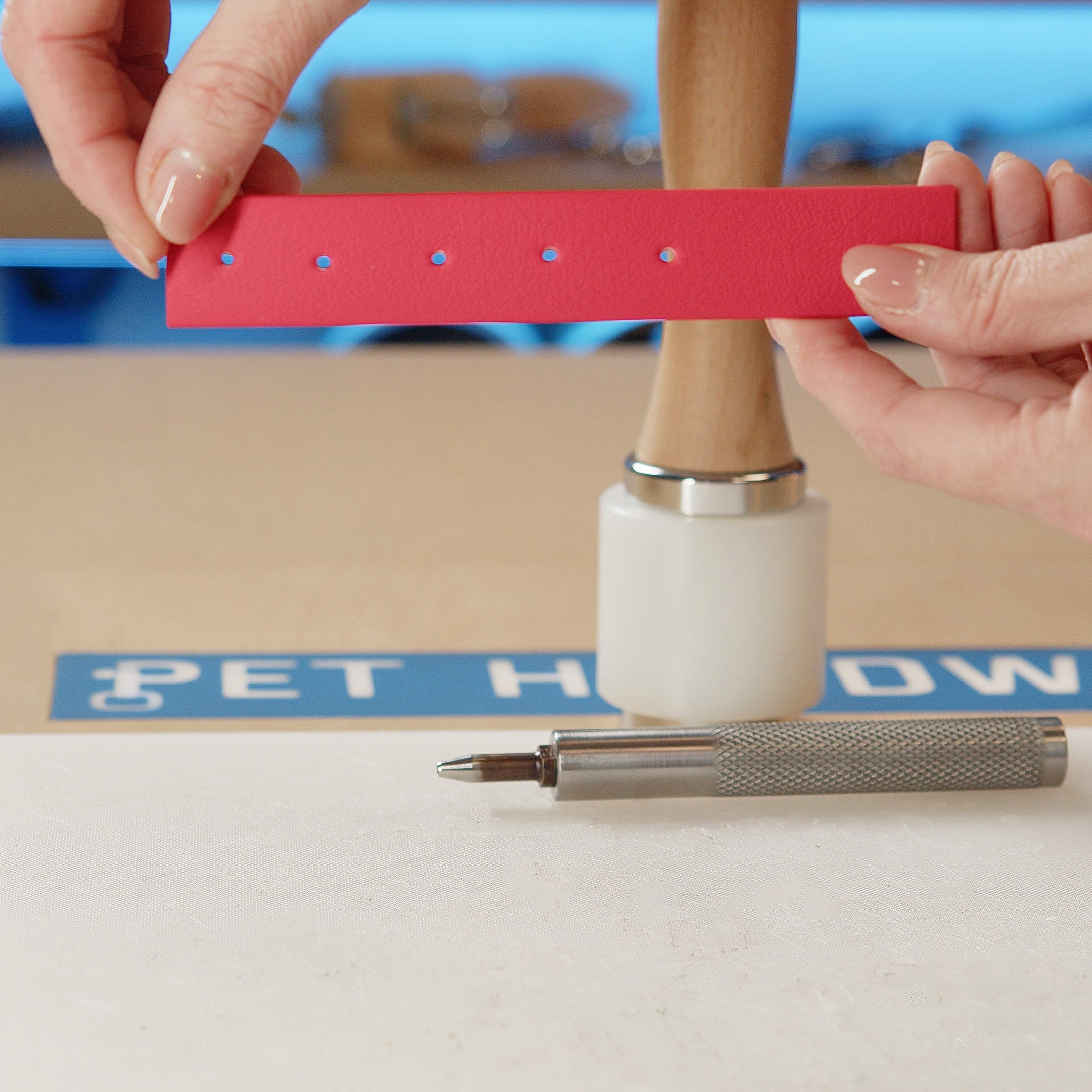
When you punch by hand, however, a cutting board is absolutely essential. It is not just about protecting your workbench. Above all, the board protects the cutting edge of the punch from hitting a hard surface and helps keep the edge undamaged for as long as possible.
With interchangeable punch tips, you need the matching handle. For example, you can fit drive punches for waterproof webbing into a steel handle for hand work and use them the usual way with a mallet and a cutting board.
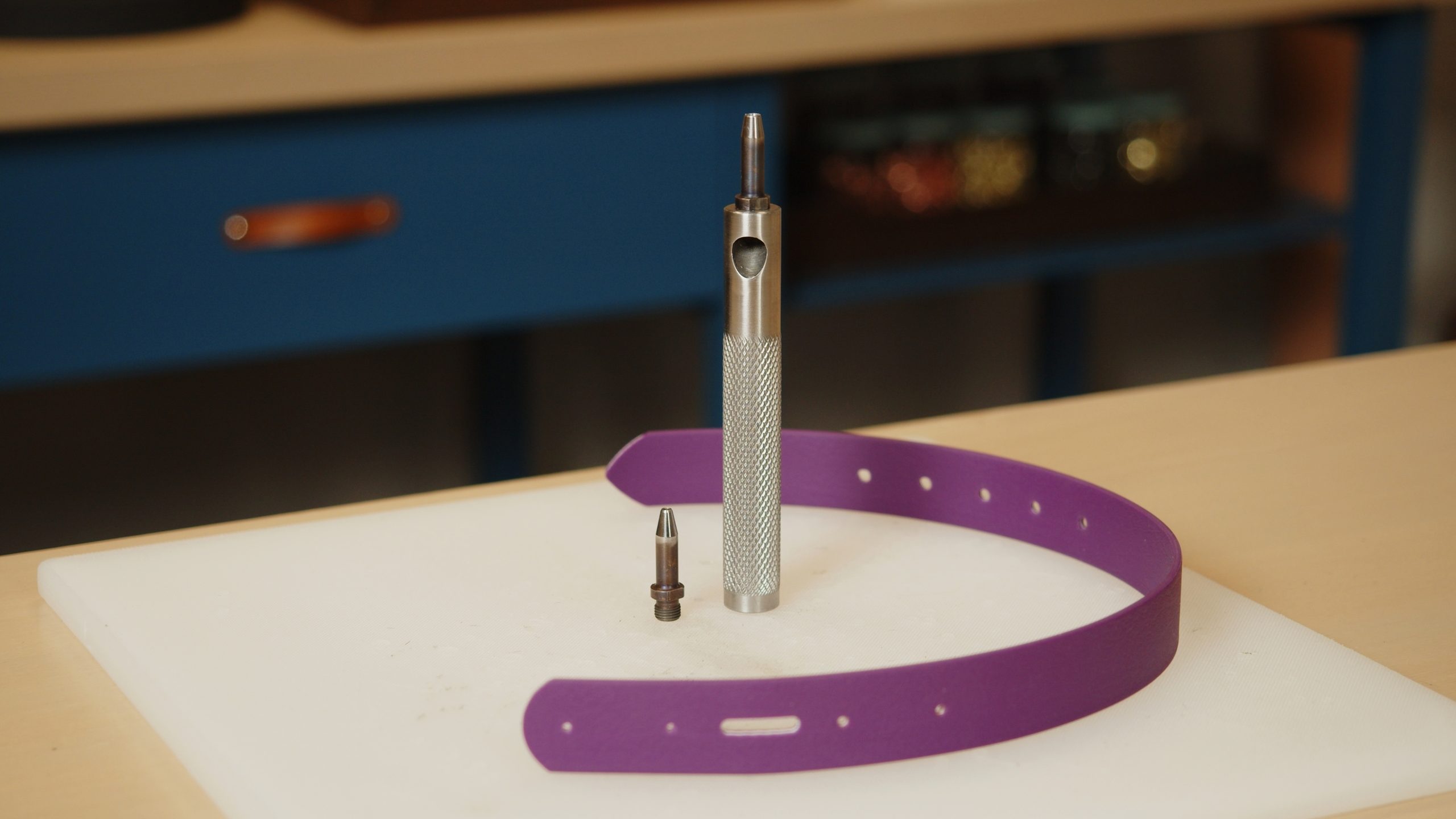
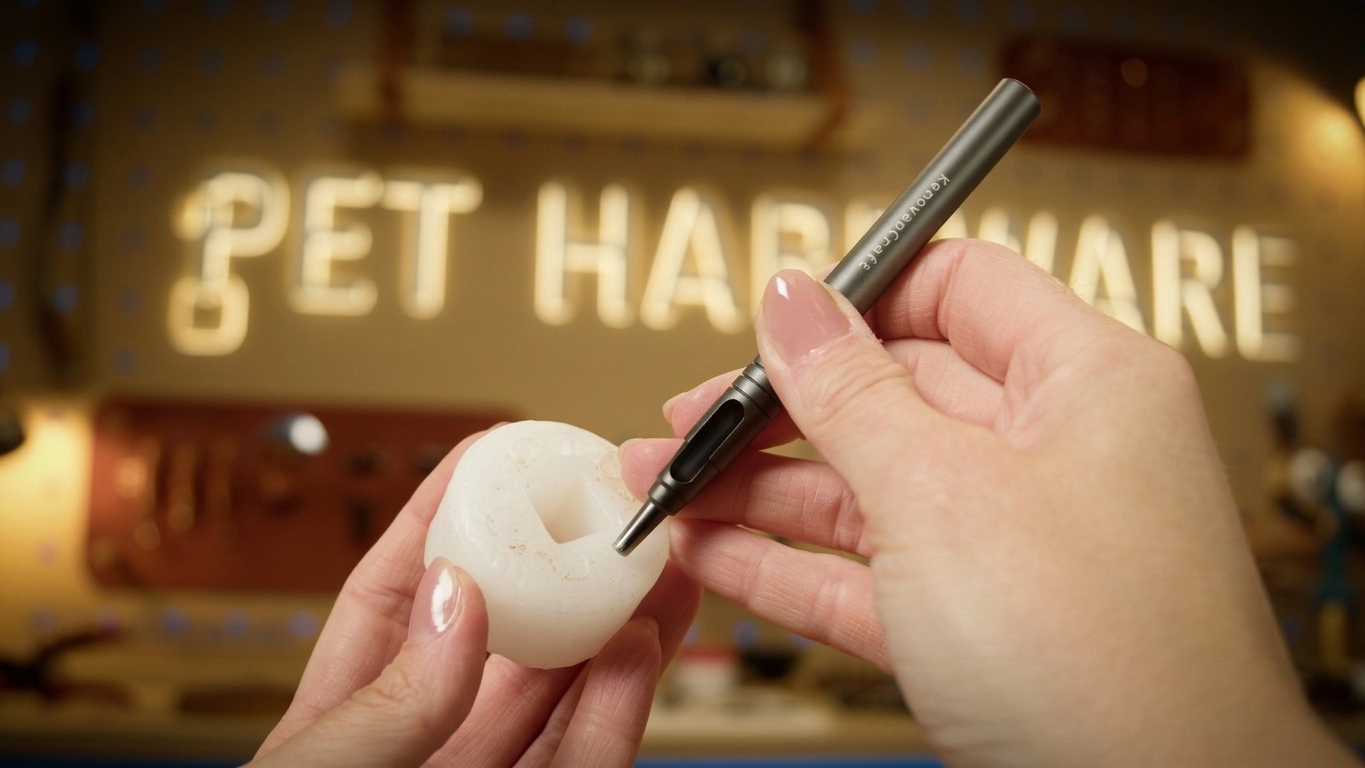
Wax is also a handy helper. Before punching, just push the punch lightly into the wax. This protects the cutting edge, and the punch comes out of the leather more easily once the hole is made.
Punching with a press
If you punch a large number of holes, a hand press starts to make more sense. You no longer have to swing the mallet again and again, the work is quieter, and with larger batches it is much less tiring.
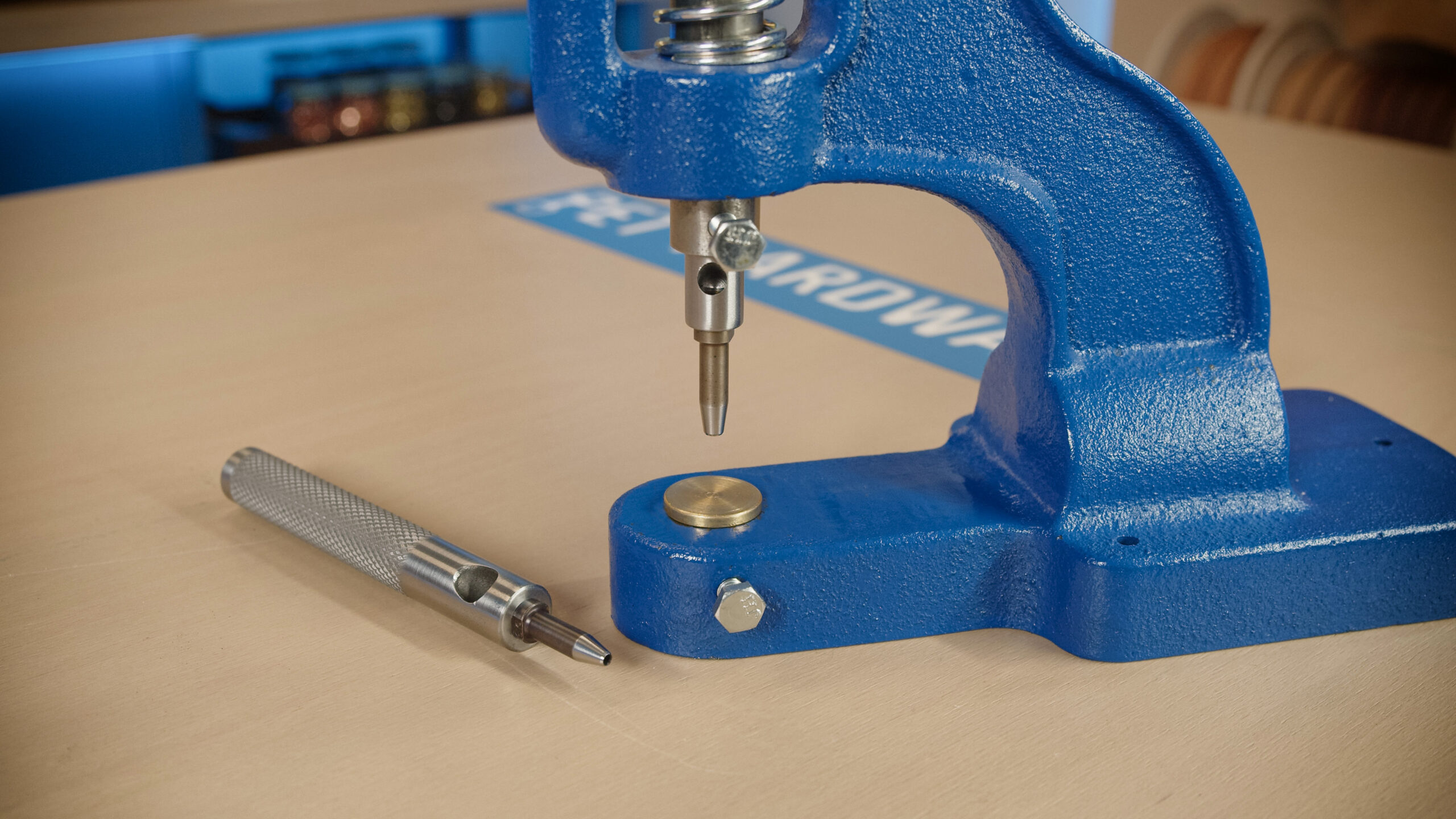
The drive punch is clamped in the matching adapter, and opposite it in the press is an anvil, which may be made of copper or brass, for example, depending on the version. It acts as the base that the cutting board provides when you punch by hand.
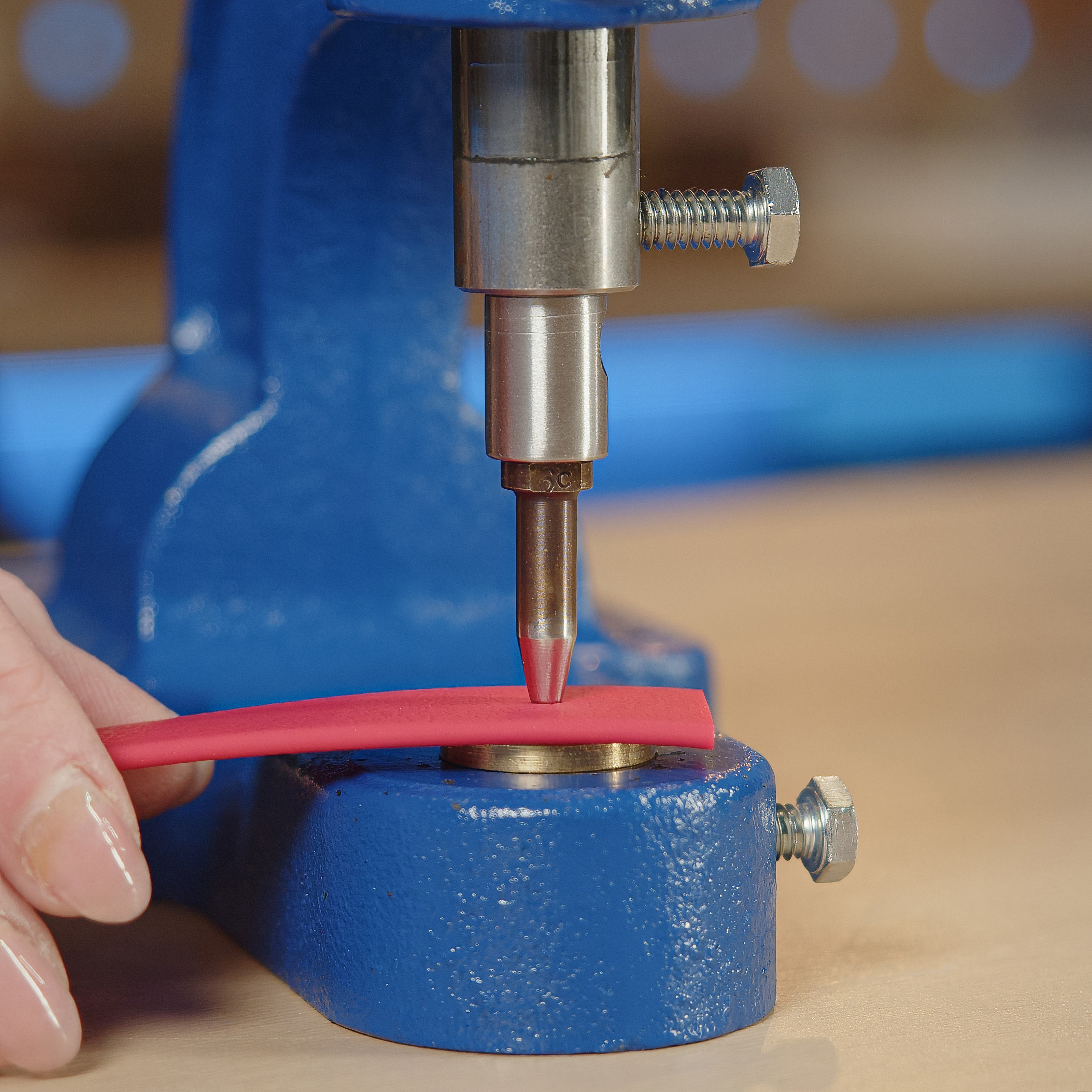
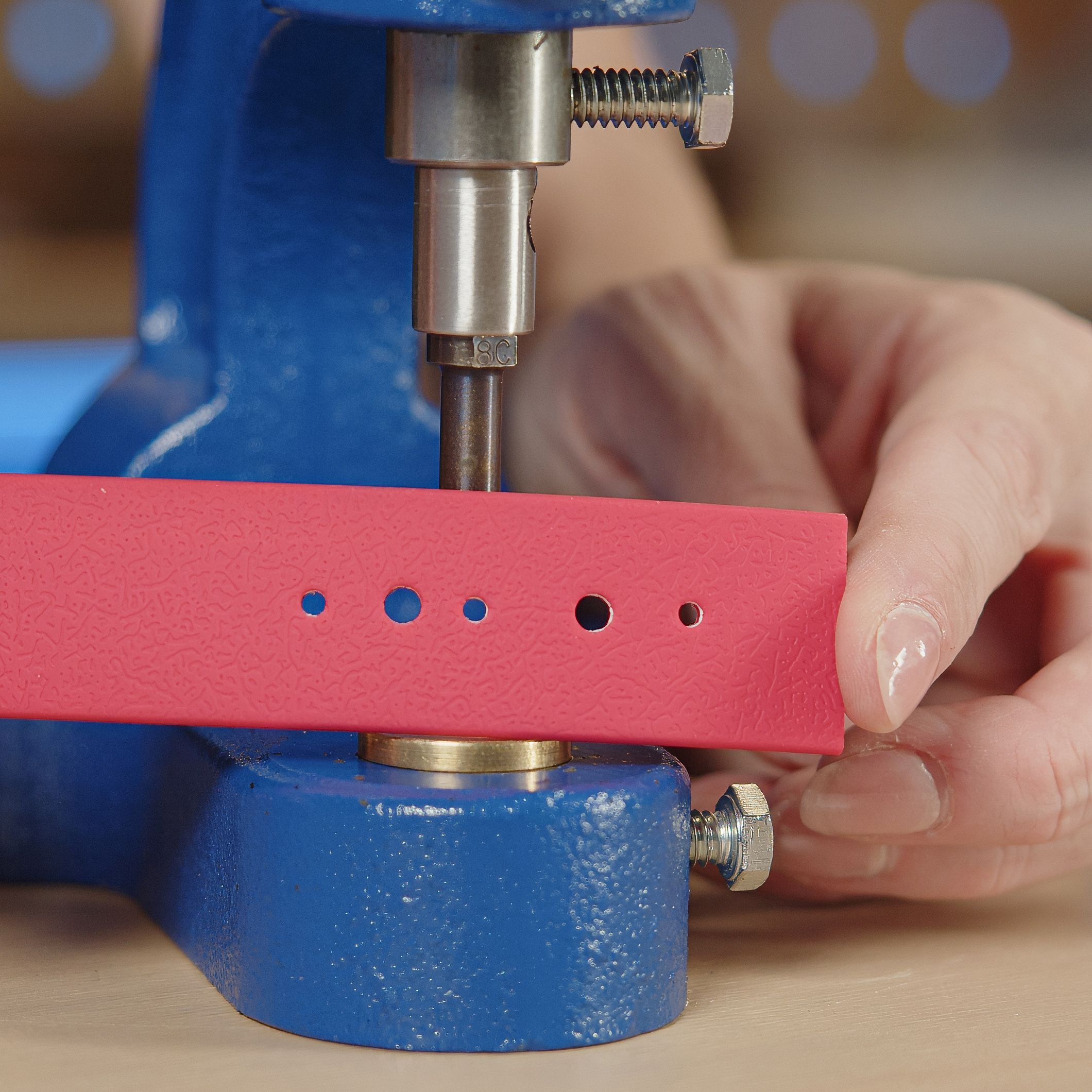
A press is practical mainly for batch production, when you make many identical or repeated holes. For a few holes or a small batch, though, a classic drive punch and mallet can still be the faster and more practical solution.
So which hole punch tool should you choose?
The most important thing is always to start with the material. Waterproof webbing needs a drive punch made specifically for this type of material. For leather, the choice is much wider and depends mainly on which hole diameters and shapes you need and how often you will punch.
For a few holes in different diameters, rotary punch pliers can be practical. If you use several sizes regularly, a punch set pays off. For one frequently used diameter, a single drive punch is convenient, and for larger batches a press can make the work much easier.
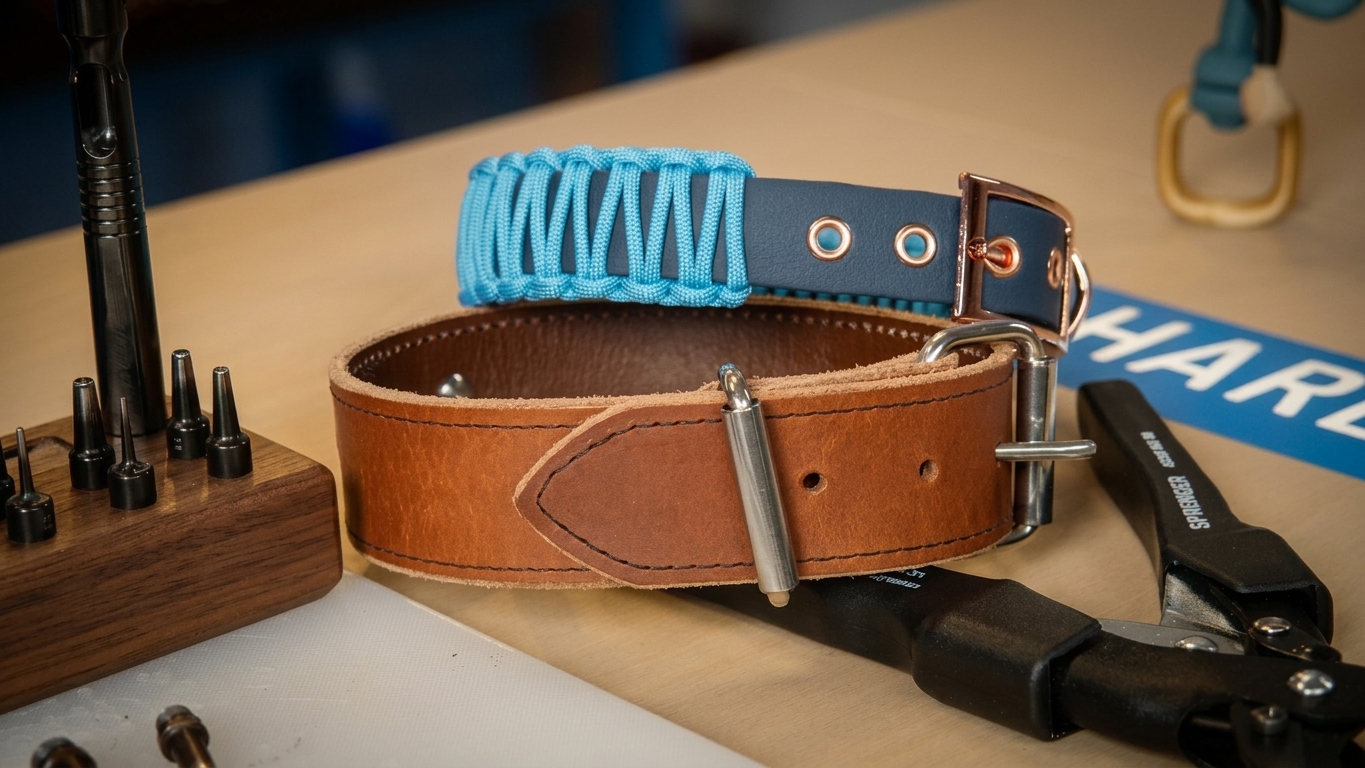
The right tool makes your work easier, helps you make a clean hole and also lowers the risk of damaging the punch through misuse.