Leather is one of the most important materials in saddlery, bag making, small leather goods, footwear, clothing and upholstery. This guide to the types of leather covers how leather is made, which animals it comes from, the parts of a hide, its layers, tanning, dyeing and surface finishes. Once you have read it, you will know what terms such as full grain, split, double butt, vegetable-tanned or nappa mean, and you will be able to choose the right leather for a collar, a belt or a bag.
In short:
Full grain = natural, uncorrected grain.
Top grain = grain that is kept but corrected.
Split leather = a lower layer without the natural grain.
Bonded leather = a material made from leather fibers or scraps held together with a binder.
Types of leather: how to read leather labels
A single leather can carry several labels at once. Each of them describes something different:
- the raw material – which animal the leather comes from,
- the part of the hide – double butt, double shoulder or belly,
- the layer – grain leather or split, or in trade terms full grain, top grain or split,
- the tanning method – for example vegetable-tanned or chrome-tanned,
- mechanical processing – milled or unmilled,
- dyeing and surface coverage – natural, aniline, semi-aniline or pigmented,
- the surface finish – for example smooth, buffed, embossed or patent.
A single leather can therefore be chrome-tanned grain leather buffed into nubuck. The labels do not exclude each other; they add up.
| Example label | What it means | Where you will come across it |
|---|---|---|
| Vegetable-tanned, grain, unmilled | Tanned with vegetable tannins, grain kept, not softened by milling | Firm grain leather for belts, bags, saddlery or tooling |
| Vegetable-tanned, split, unmilled | The lower layer of vegetable-tanned leather, without the natural grain | A more affordable material for parts that see less strain, auxiliary parts or hidden parts |
| Chrome-tanned, grain, milled | Chrome-tanned leather with the grain kept, mechanically softened in a drum | Soft, supple leather for small leather goods, footwear, clothing or upholstery |
| Grain, corrected, embossed | The grain was partly corrected and then embossed with a pattern | Leather with a uniform pattern or an imitation of another surface |
| Split, finished | A split with a sprayed or applied coating or an embossed pattern | A material that looks similar to grain leather |
These examples are only a guide. The final properties of a leather depend not only on the tanning method and the layer, but also on thickness, the type of hide, dyeing, buffing, milling and surface finish. The same basic combination can therefore come in many forms and under different trade names.
What leather is made from
Rawhide
Raw cowhide is a by-product of the food industry. Chemically, untreated cowhide consists of water (50–70 %), proteins (collagen in the hide, keratin in the hair, 30–35 %), fats, waxes, mineral matter and organic and inorganic impurities. Hide is an organic material that degrades easily: it dries out and cracks quickly, and it rots in damp conditions. That is why it is tanned into leather.
Not every processed material made from animal hide is leather. Parchment, for example, is not tanned: the dehaired hide is stretched, dried and further worked, so technically it is not considered leather.
Tanned hide = leather
Leather is processed rawhide whose physical and chemical properties have been changed by tanning. Tanned leather is breathable, supple, elastic and holds its shape, yet it is also tough and resistant to wear and to weak acids and alkalis. It keeps its flexibility, pliability and strength over time. It absorbs moisture from the body, but it can also close itself off against too much moisture. Leather feels warm to the touch and has a characteristic smell from the tanning agents used. Every piece of leather is unique.
Natural marks and defects in leather
Leather is a natural material, so its surface can carry marks from the animal’s life. These include scars, scratches, wrinkles, insect bites, small injuries or brands used to mark cattle. Some cowhides can also show scars caused by warble flies. Further damage can occur when the hide is removed, preserved, transported or later processed in the tannery, for example cuts, holes, tears or marks from stretching.
These marks can reduce the usable area of the leather, but they also confirm its natural origin and give every piece a unique look. Whether they count as defects or as a welcome part of the material’s character depends on what you are making. On a smooth handbag they may be unwanted, while on a satchel, a backpack or a belt they can be an interesting design feature.
On natural, aniline and lightly finished leathers these marks stay clearly visible. Pigmented leather or leather with a heavy surface finish can partly hide them and give it a more uniform look.
Which animal the leather comes from
Cowhide
Cowhide mostly comes from domestic cattle. Depending on the age and sex of the animal, it is further divided into yearling hides, heifer hides, cow hides, bull hides and steer hides. The back area is usually the densest, while the edges tend to have a looser fiber structure and stretch more. Its advantage is the relatively large area of leather you get from one hide.
Calfskin
Calfskin comes from calves or young cattle. It has an even fiber density and a fine grain. Calfskins are smaller and finer than cowhides. They cost more because they are fine and small, and they are used mainly for fine small leather goods and footwear.
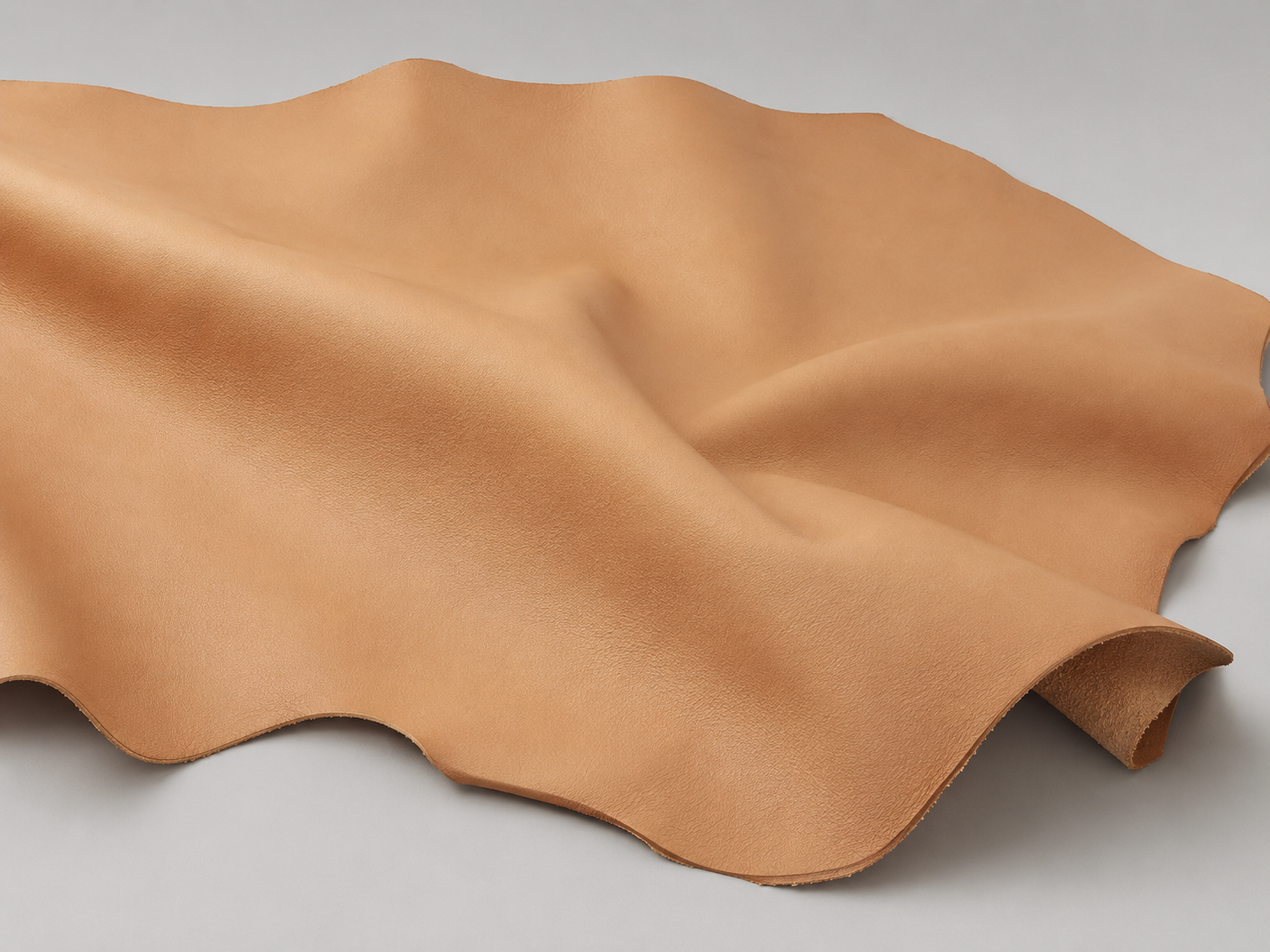
Pigskin
Pigskin has a distinctive grain pattern. The butt is dense, while the belly areas are loose.
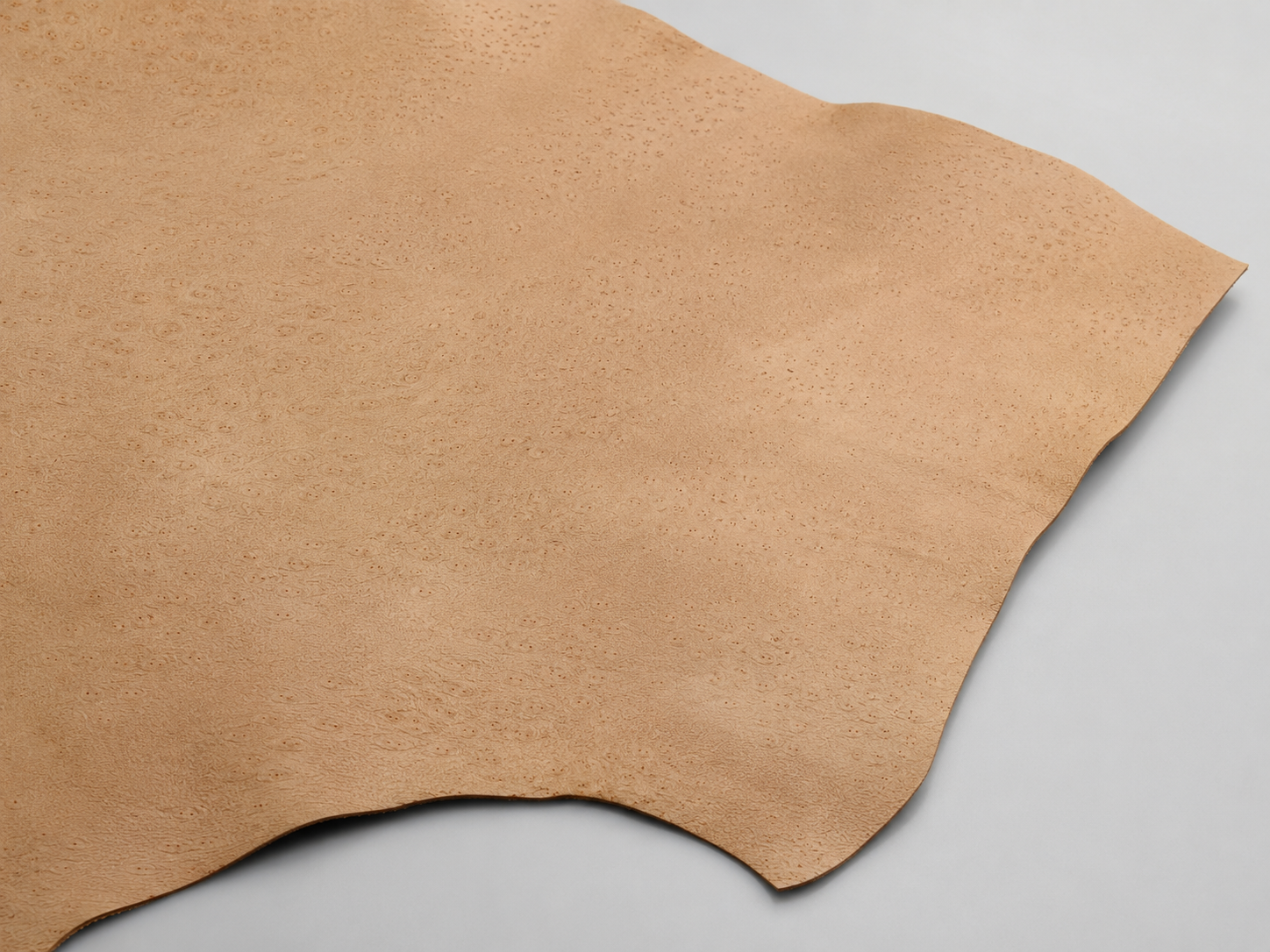
Goatskin, sheepskin and lambskin
Goatskin, sheepskin and lambskin come from smaller animals, so they usually have a smaller area than cowhide. Their properties, however, differ a lot. Goatskin can be fairly strong and durable even when thin, while fine lambskins and sheepskins are often soft and supple. They are used, for example, for gloves, clothing, footwear, upholstery and fine small leather goods.
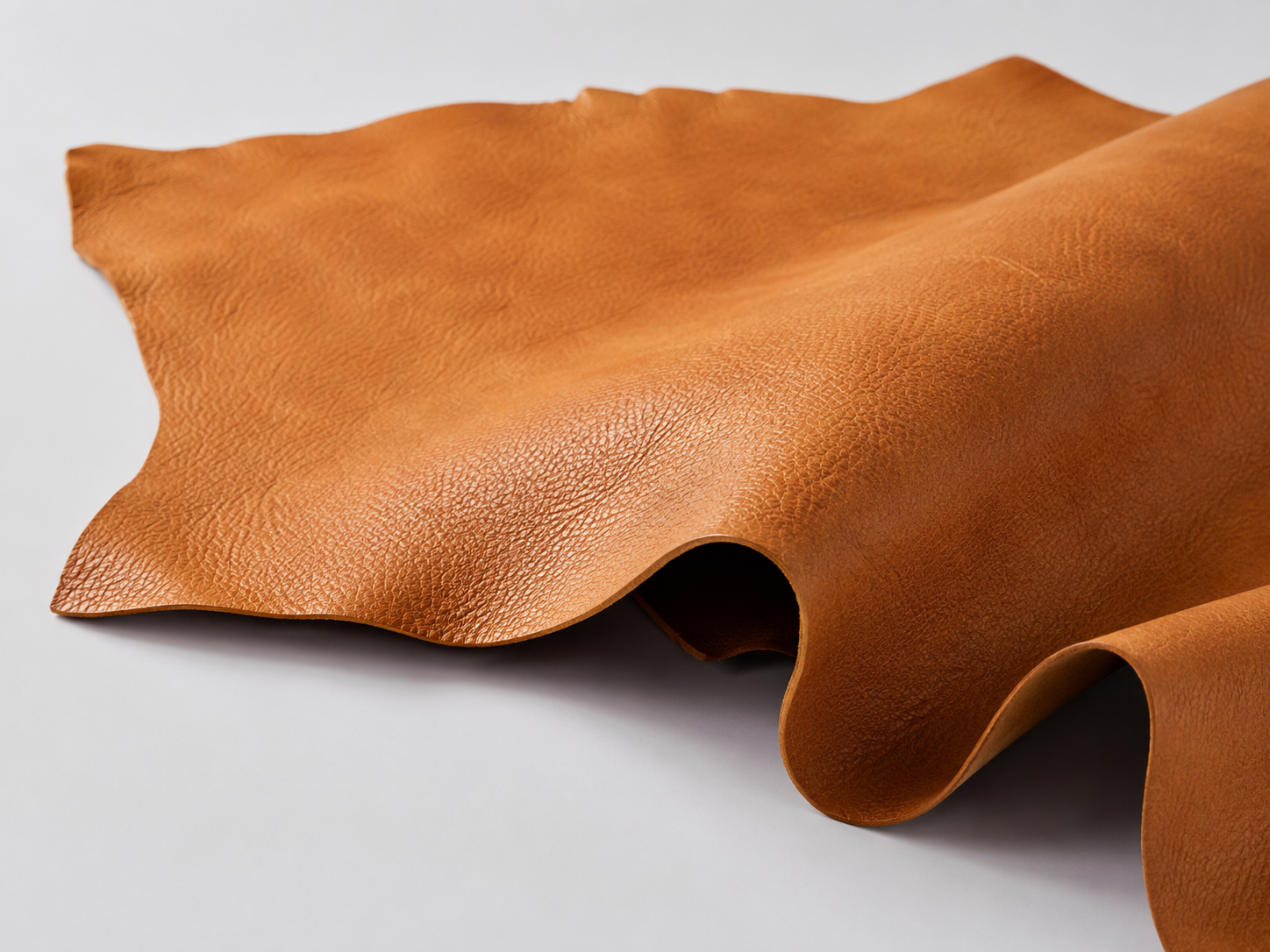
Reptile leather
Leather from reptiles such as crocodiles, snakes or lizards is used mainly for small leather goods, footwear and accessories.
Hair-on leather
When some hides are processed, the hair is not removed and stays a natural part of the finished material. Such leathers are used, for example, for rugs, decorations, clothing, accessories, upholstery or furrier’s goods. The look, density and coloring of the hair depend on the animal species and the individual hide.
Parts of a hide: double butt, double shoulder and belly
Cowhide is also sold in parts, for example as a double butt or a double shoulder. Each area has different properties, so the part you choose affects the strength, shape retention and price of the leather.
Double butt
The double butt is the back and rump area of the hide. It is the strongest and most stable part, so it suits firm products that need to hold their shape. Double butts in stock
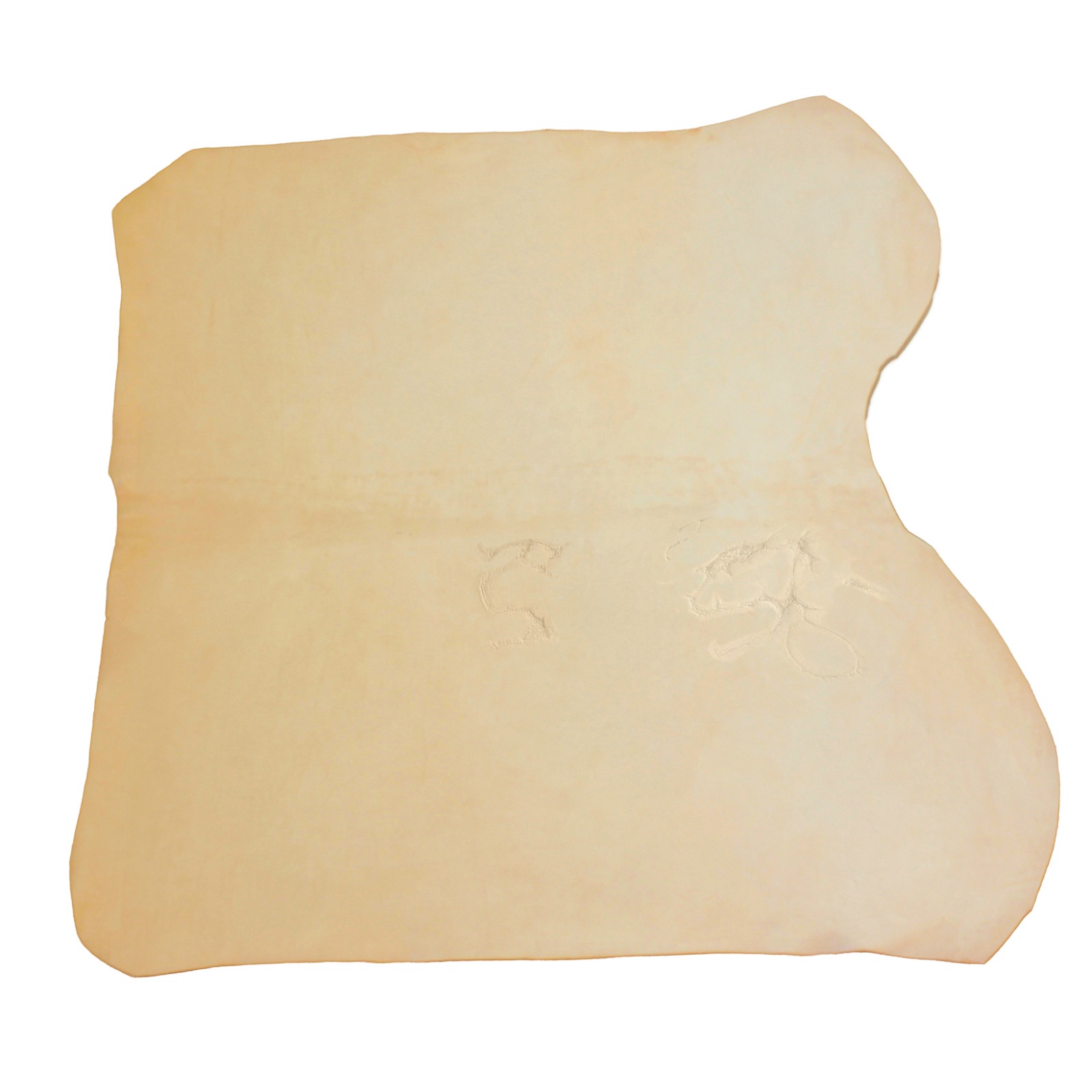
Double shoulder
The double shoulder is the neck and shoulder area of the hide, not the rump (the rump belongs to the double butt). It tends to be softer and more flexible than the double butt, and the piece is smaller. Double shoulders in stock
Bellies
Bellies are the edge areas of the hide. Their fibers are looser than in the double butt, and the leather tends to be thinner and stretch more. They suit smaller and secondary parts better than straps. On cowhide the bellies are small, so we do not sell them separately.
Trade names for parts of the hide
Leather suppliers use these names:
- double butt – the back and rump area,
- bend – half of a double butt,
- double shoulder – the neck and shoulder area,
- side – half of a whole hide,
- belly – the edge area.
Leather layers: grain leather and split
Grain leather
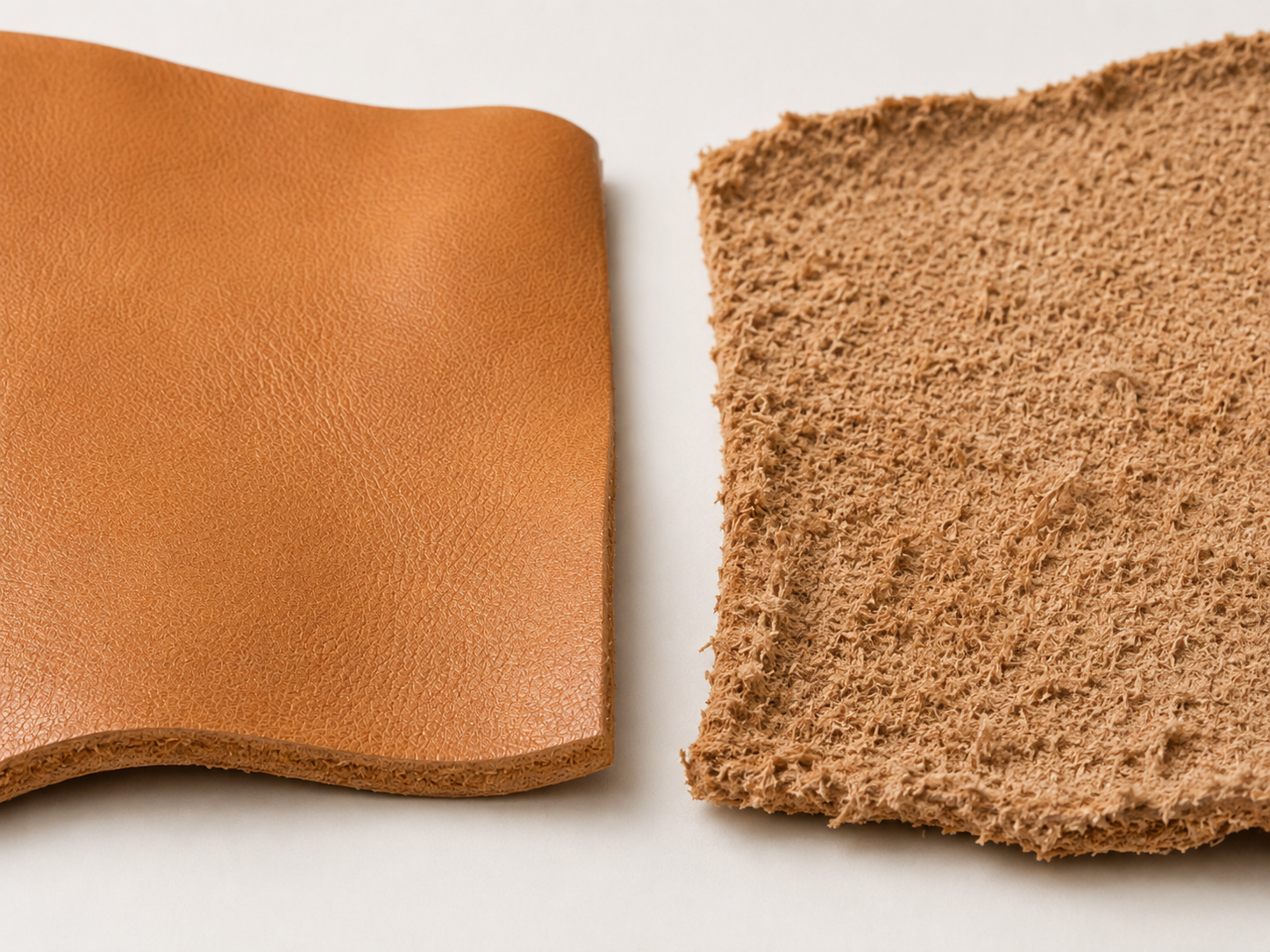
Grain leather comes from the top part of the hide and keeps its natural grain layer. Its surface can show pores, fine wrinkles, scars and other natural marks of the original hide. Because the grain is kept, it is usually stronger and more durable than a split.
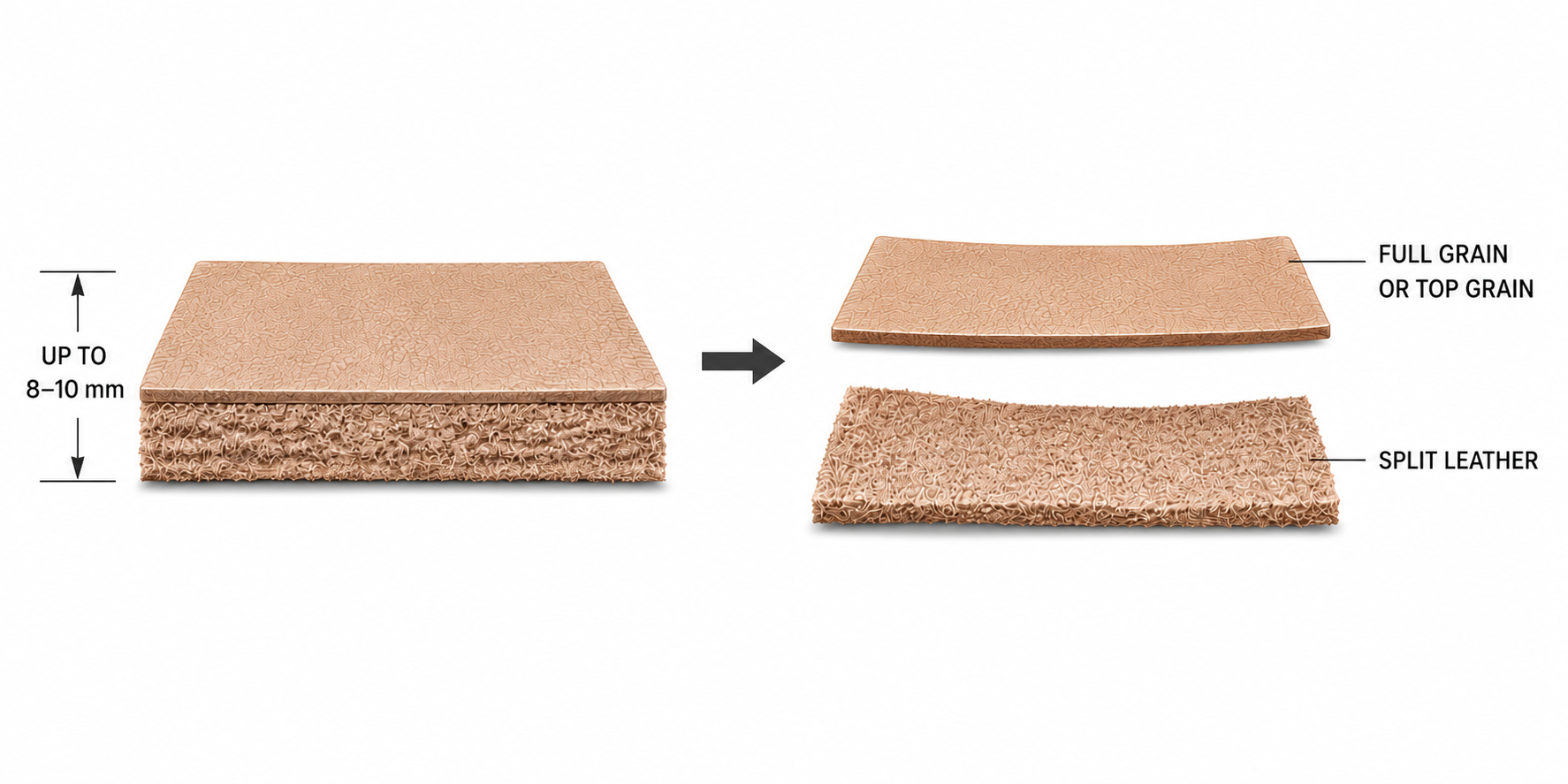
Under the grain lies a thicker fibrous layer (technically the corium). Its fibers are coarser and tightly interwoven. When a thick leather is split, it is divided into two: the upper piece with the grain is grain leather, and the lower piece from the fibrous layer is the split.
If the grain has more visible defects, the tannery can lightly buff or otherwise correct it and then often apply a coating or an embossed pattern. Such leather is called corrected grain leather. It is still grain leather, not a split, and it is often sold as top grain.
Split
A split is made by separating the lower layer of the leather horizontally. It has no natural grain, because the grain stays on the upper part. Its surface is therefore more fibrous. Depending on its intended use, it can be left buffed, for example as suede, or further finished by dyeing, spraying, coating or embossing. These finishes can even out the surface or create a pattern that imitates grain leather.
A surface finish, however, does not turn a split into grain leather. Splits are usually more affordable and generally less durable under long-term flexing, abrasion and heavy mechanical strain. That is why they are used mainly for parts that see less strain, auxiliary parts or hidden parts, or where a lower price matters more than the longest possible service life.
On dyed splits, the look comes from a covering color finish that can wear off over time where the leather is often bent or rubbed. Splits in stock
Full grain, top grain and corrected grain: what is the difference?
When choosing leather, you will often come across the terms full grain and top grain. At first glance they may look like two clearly different kinds of leather. In trade practice, however, their meanings partly overlap.
To understand them, it helps to ask whether the leather has kept its original grain or whether the surface has been mechanically buffed.
Full-grain leather: the original grain is kept
Full grain is grain leather whose natural grain has not been corrected by buffing. It keeps its original surface structure.
Such leather may show natural irregularities, small scars or variations in the grain pattern. This does not mean, however, that every full-grain leather has visible defects.
Important: full grain does not mean undyed, unwaxed or unfinished leather. It can be dyed, oiled, waxed or given another finish. What matters is that the original grain is kept.
Snuffed-grain leather: the grain is lightly buffed
Here the original grain is lightly buffed to even out its look and make small surface defects less visible.
The leather still comes from the grain side and it is not a split. The buffing affects the original grain, but less than a heavier correction does.
Corrected-grain leather
With corrected grain, the original grain is buffed more heavily. The aim is to remove small surface defects or make them less visible and to create a more uniform base for finishing.
Such leather can be given a pigmented finish or an embossed texture, for example an imitation of a natural grain pattern or a crocodile pattern.
Note: pigmentation or embossing alone does not mean the leather is corrected grain. What counts is that the original grain was mechanically corrected beforehand.
Top-grain leather: why the term is confusing
The term top grain is used for leathers from the upper grain side of the original hide.
In the broader sense, it can include leathers with the original grain kept as well as leathers whose grain has been lightly buffed or more heavily corrected.
Some shops, however, use top grain in a narrower trade sense for grain leathers with a corrected, often buffed surface, to set them apart from full grain.
So the label top grain alone does not reliably tell you whether the original grain has been buffed. You need to know the specification of the particular material.
Split leather
A split is the lower part that is separated when a hide or leather is split to thickness. It has no original grain, but it is still genuine leather.
Its surface can be buffed, left without a covering finish, or given an artificially created surface.
A split should therefore not be confused with grain leather whose surface has only been buffed.
Bonded leather: is it real leather at all?
Bonded leather is a composite material made from shredded leather fibers or scraps held together with binders, such as polymers.
The material is formed into sheets. For some products it is applied to a backing, often textile, that helps reinforce it. The surface can then be given a coating or an embossed pattern that imitates the natural grain of leather.
Unlike grain leather or a split, it is not a single piece of leather, but a material made from leather fibers bonded together after the fact.
You can find bonded leather in various products, such as handbags, wallets, belts, cases, furniture covers or office accessories. At first glance it may not be obvious that it is not solid leather. The name alone also does not tell you the exact share of leather fibers or the amount of binder used. You need to check these details for the specific product.
What to remember
- Full grain: the original grain is kept and has not been corrected by buffing.
- Snuffed grain: the original grain is lightly buffed.
- Corrected grain: the original grain is more heavily corrected by mechanical means.
- Top grain: a term for grain leather that is not used consistently. In the broader sense it can include full grain as well as leathers with a buffed or corrected grain.
- Split leather: genuine leather that does not have the original grain.
- Bonded leather: a composite material made from shredded leather fibers or scraps held together with a binder. It is not solid leather.
The tanning method is a separate property. Both full-grain leather and corrected-grain leather can be, for example, vegetable-tanned or chrome-tanned.
How leather is tanned
Chrome-tanned leather
Chrome tanning is the newest and currently the most widely used tanning method. The process uses chromium compounds, which usually make the resulting leather soft, supple, strong, durable and easy to dye. Compared with regular vegetable-tanned leather, it generally copes better with moisture. Chrome-tanned leather is therefore often used for footwear, clothing, upholstery, technical products and some kinds of straps.
Vegetable-tanned leather
Vegetable-tanned leather is tanned with vegetable tannins, which come, for example, from the bark, wood, leaves or fruit of certain plants. Vegetable tanning is one of the traditional ways of processing hides. The resulting leather is usually firm and holds its shape, and it takes dyeing, tooling and molding well.
Vegetable-tanned leather can be grain leather or a split. The tanning method does not tell you which layer of the hide the leather comes from.
All cowhide leathers we sell are vegetable-tanned.
Chamois leather
Oil tanning. Leather tanned this way is called chamois (buckskin). Today, hides of roe deer, red deer, fallow deer, mouflon and even antelope and gazelle are tanned this way. They have a pleasant yellowish-brown color and are used for shoe linings, gloves, cleaning windows, cars and optical instruments, orthopedic aids and prostheses, technical filters and membranes, and for hobby purposes (Native American-style and western clothing). Almost any type of hide can be oil-tanned.
Syntan-tanned leather
Syntans are synthetic tannins used on their own or combined with other tanning agents. They make it possible to influence the color, softness, fullness and other properties of the leather. They are often used in combination tanning or retanning, and the resulting leather can have properties similar to vegetable-tanned leather.
Alum tawing
Rawhide is tanned with aluminum salts, such as alum. This method is used to tan fine leathers (goatskin, sheepskin, calfskin) white. Traditionally tawed leathers have low water resistance unless further treated.
Mechanical processing: milled and unmilled leather
Milled leather
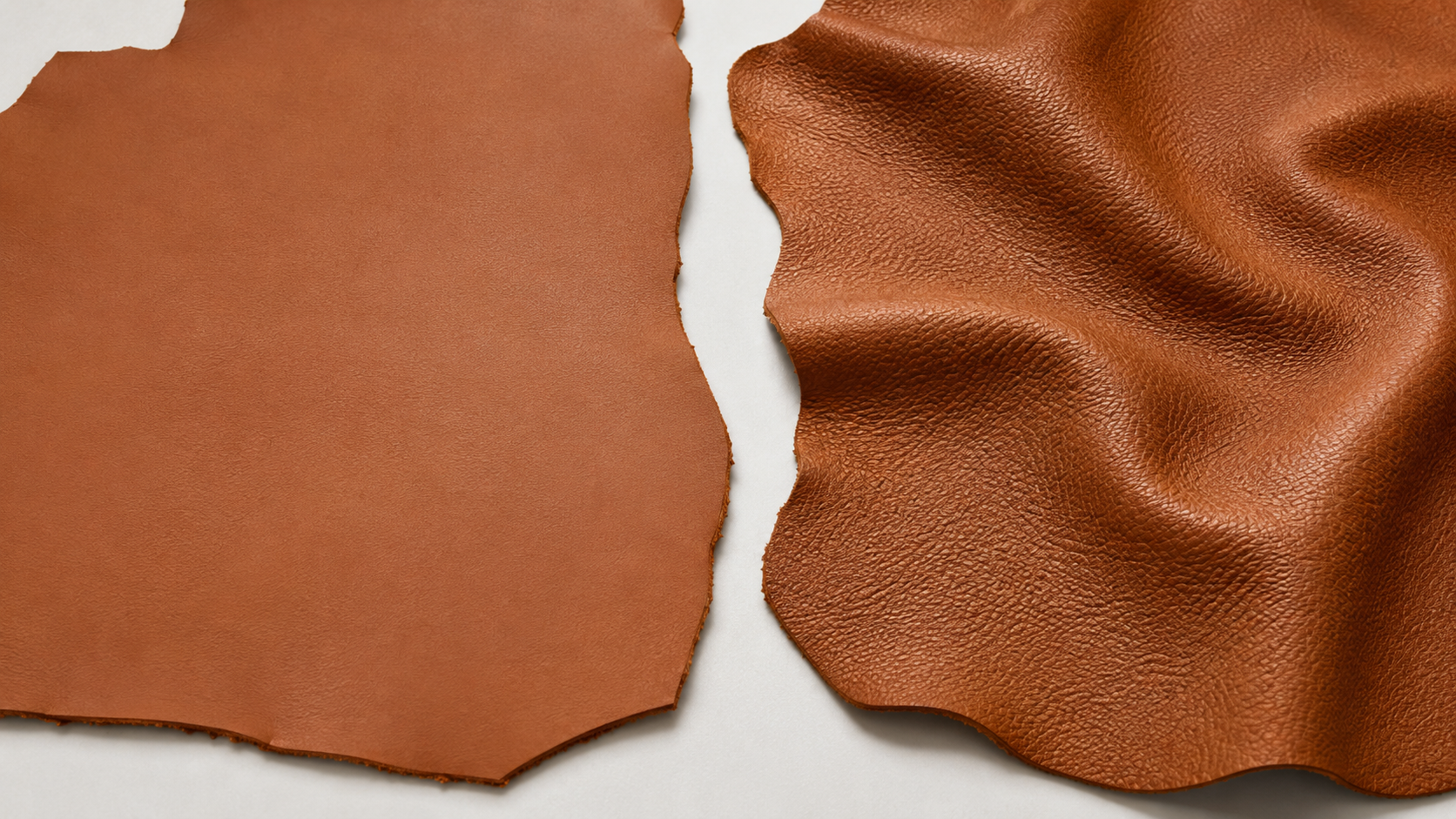
Milling softens leather mechanically in a rotating drum. The leather becomes softer and more supple, and its natural texture can stand out more on the surface.
Unmilled leather
Unmilled leather has not gone through milling. It usually stays stiffer, has a smoother surface and holds its shape better.
The grain leathers we sell are unmilled, so they stay stiffer and hold their shape better. Cowhide leather in stock
Dyeing and surface coverage
Aniline leather
It is dyed with transparent dyes without a covering pigment layer. The natural grain, pores and small marks stay visible. It looks and feels very natural, but it is more sensitive to stains, moisture, light and scratches.
Semi-aniline leather
It has a light pigment or protective layer that partly evens out its look and makes it more durable. The natural grain structure, however, is still fairly easy to see.
Pigmented leather
It has a covering color layer that evens out the shade, hides some of the natural marks and makes it more resistant to stains, moisture, abrasion and frequent cleaning. Both grain leather and splits can be pigmented.
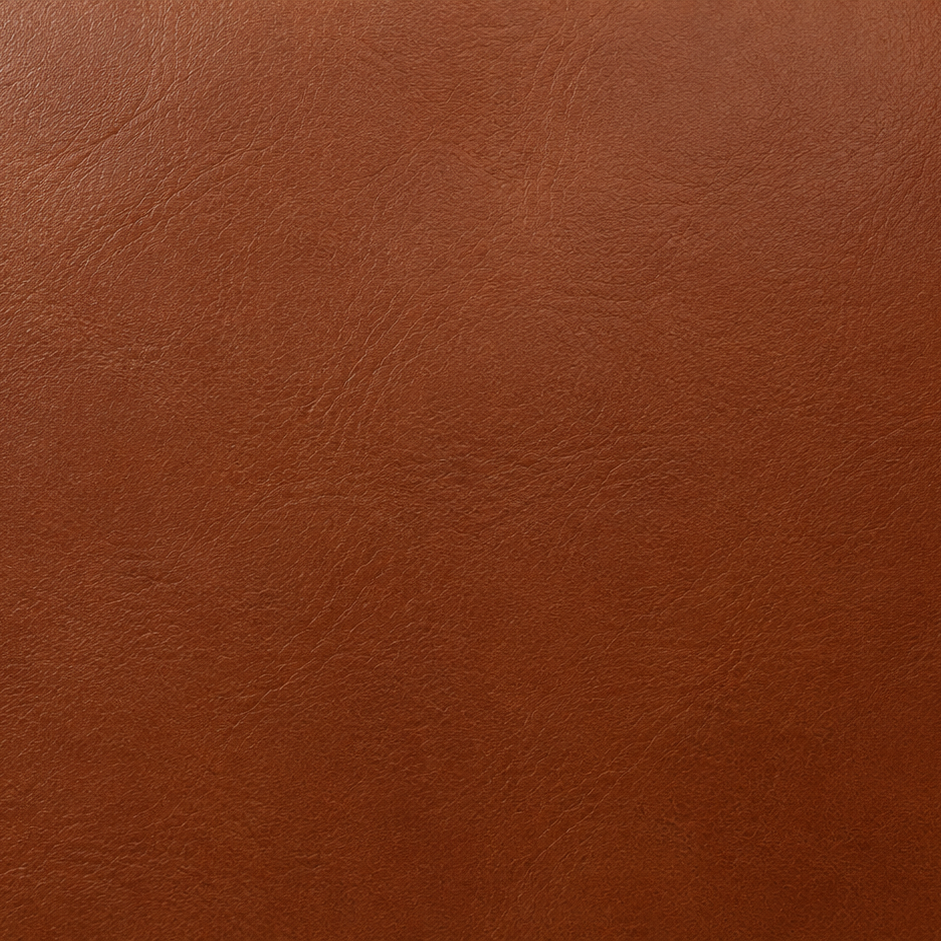
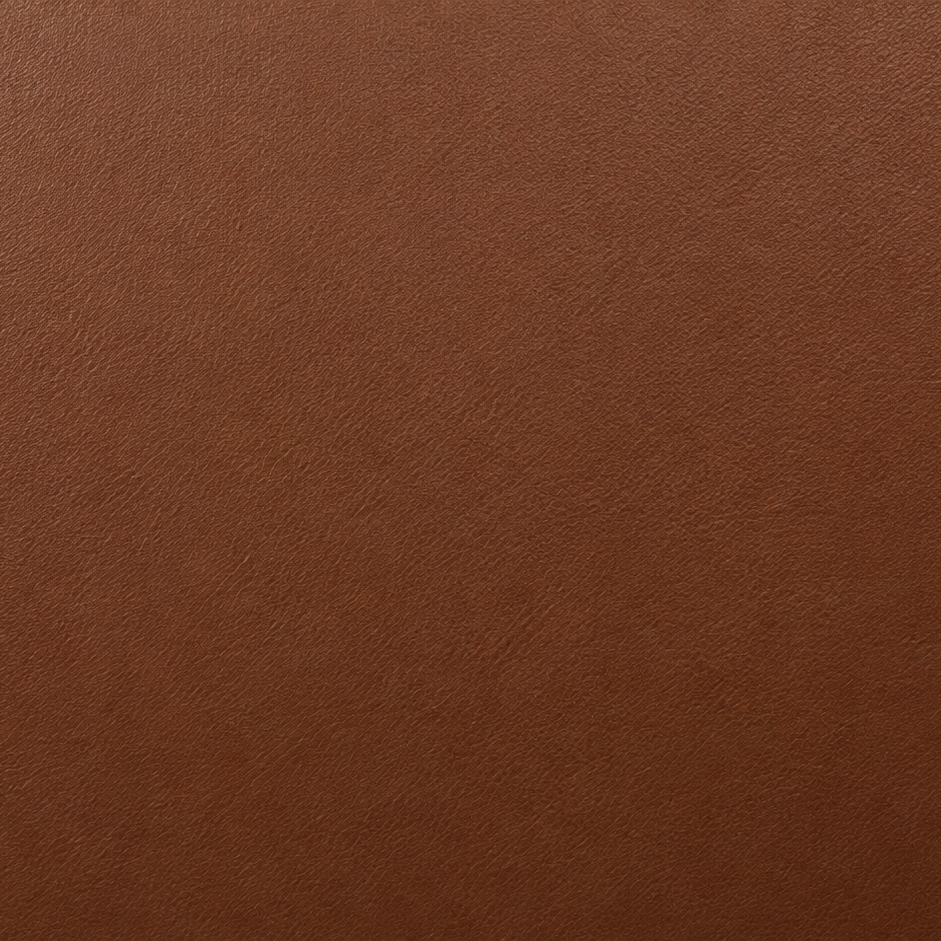
Natural undyed leather
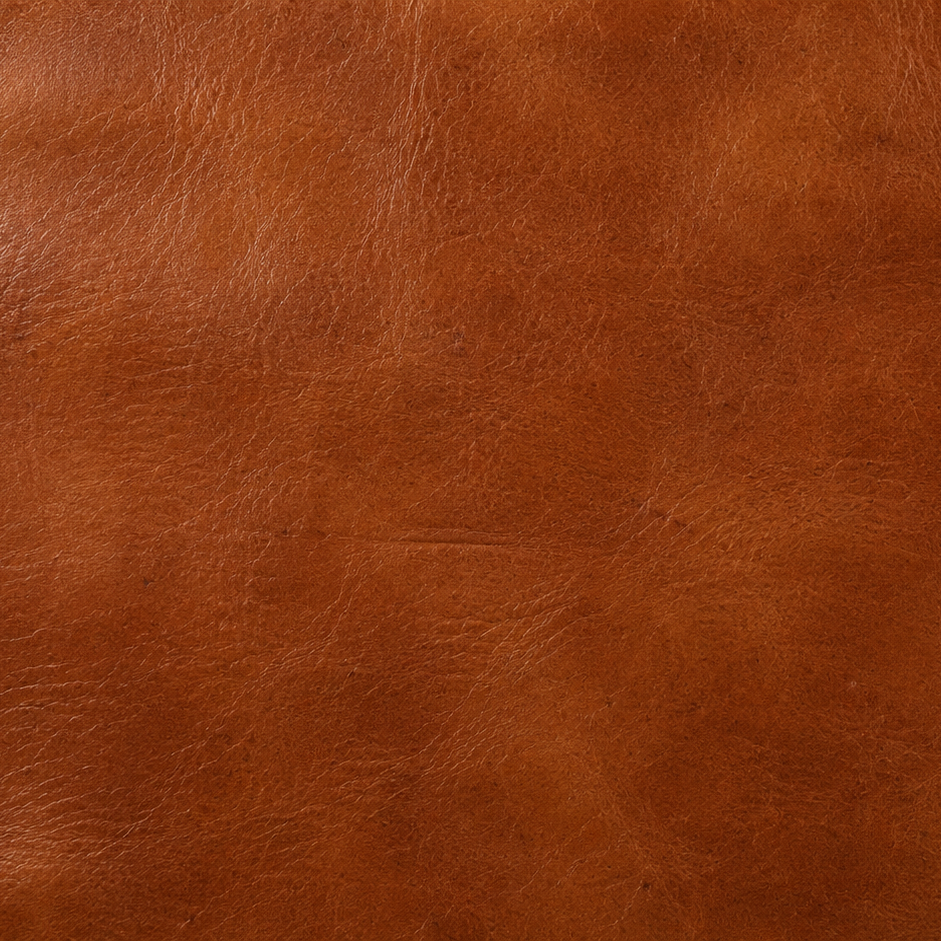
Besides leathers dyed and finished at the tannery, natural leathers intended for further craft work are also sold. You can dye, oil, wax, lacquer or otherwise finish them yourself to get the look and performance you want.
You can dye natural leathers yourself. Our leather colour chart shows how individual stains, patinas and acrylic paints look on real leather samples. To learn how to finish the color and the surface, see our guide to leather finishes.
The dyed grain leathers we sell are dyed through their full thickness, so the color shows on the cut edge too and stays even when the grain is scuffed. It is not fixed at the factory, though, so give the finished product a surface finish.
Surface finishes and the look of leather
Smooth leathers
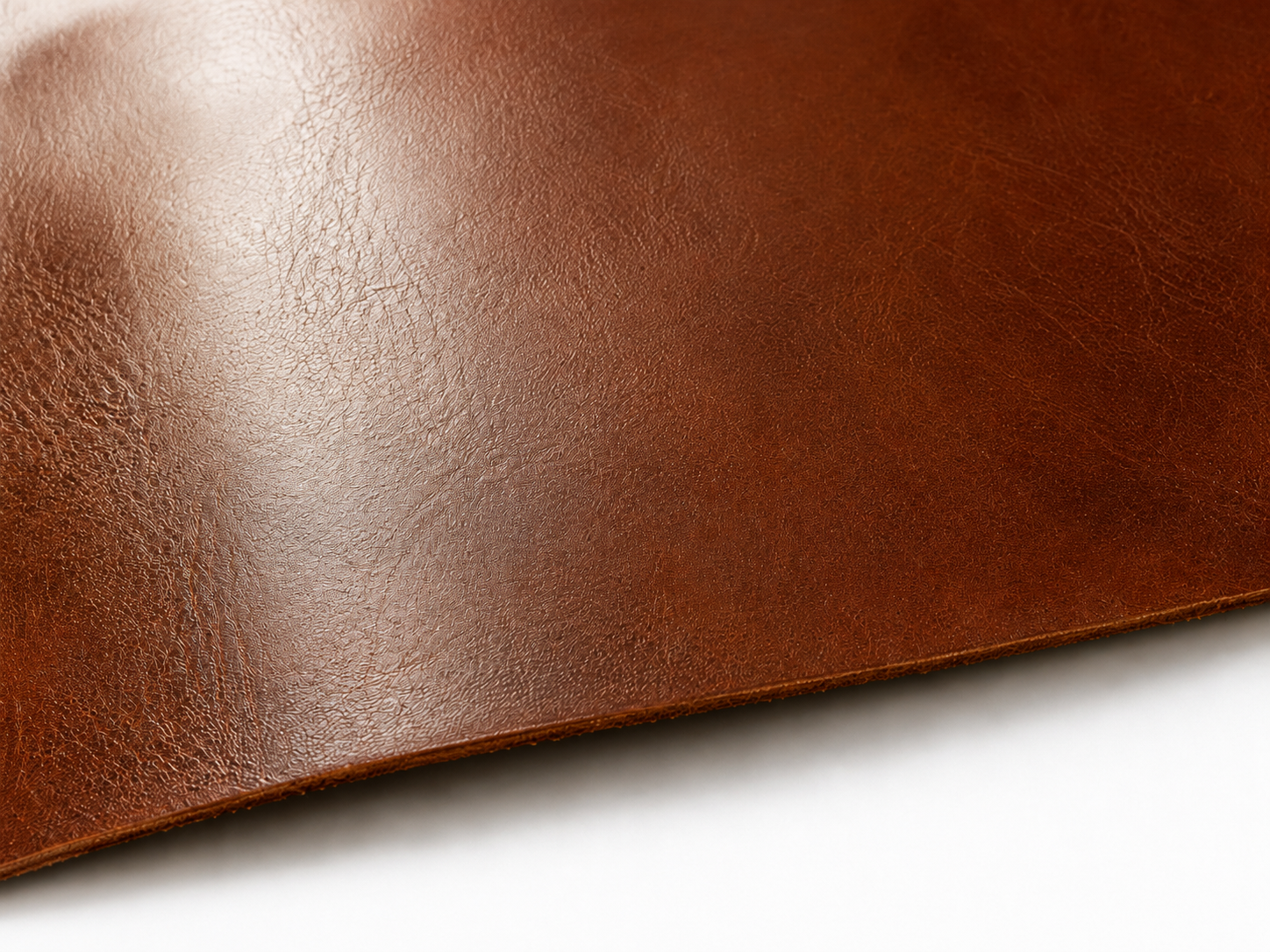
Smooth leather
It has a continuous surface without a nap. It can keep the natural grain pattern, pores, wrinkles or other marks of the original hide.
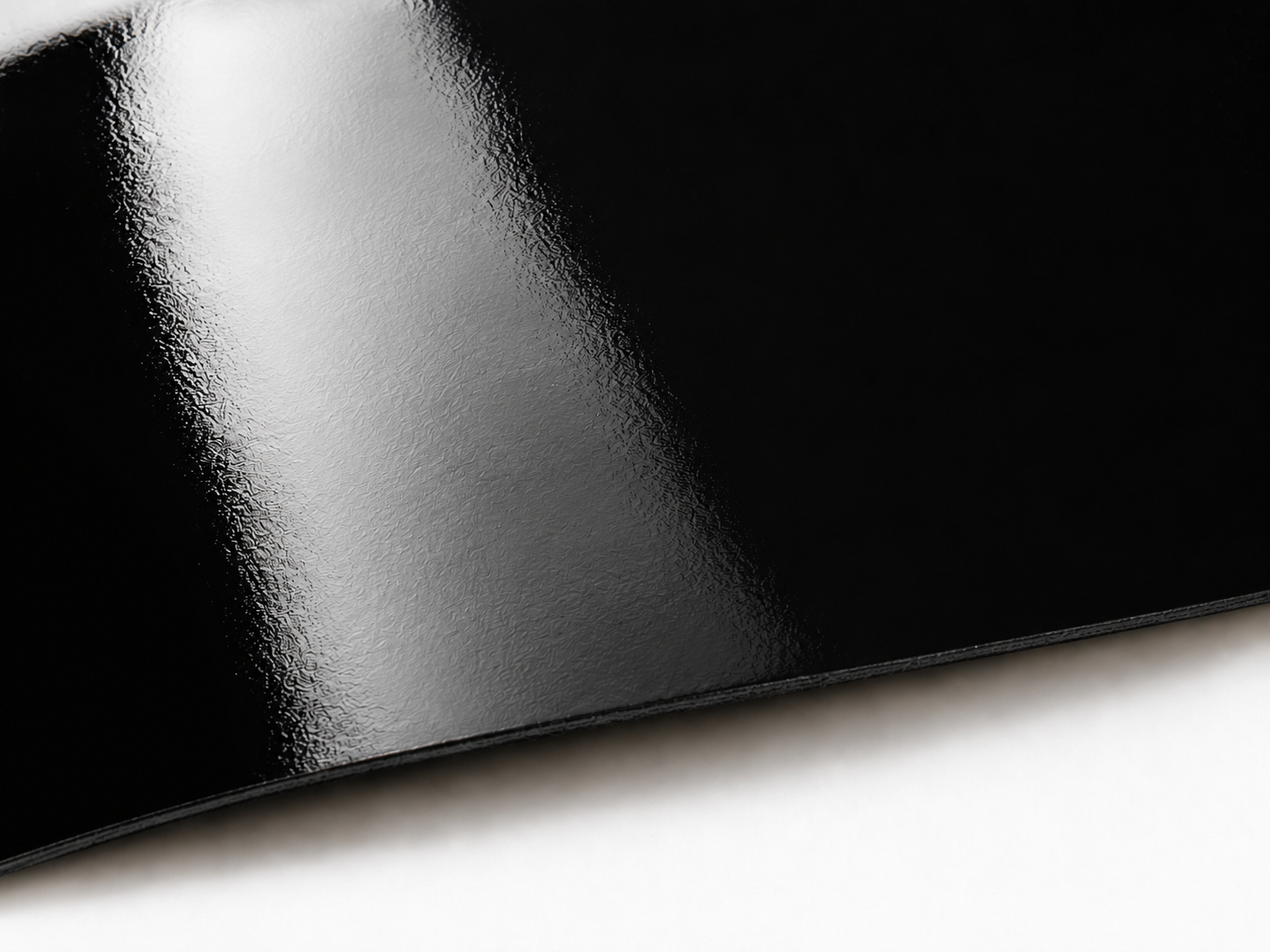
Patent leather
It has a smooth, very glossy covering layer. This layer hides the natural surface of the leather and creates the typical patent look.
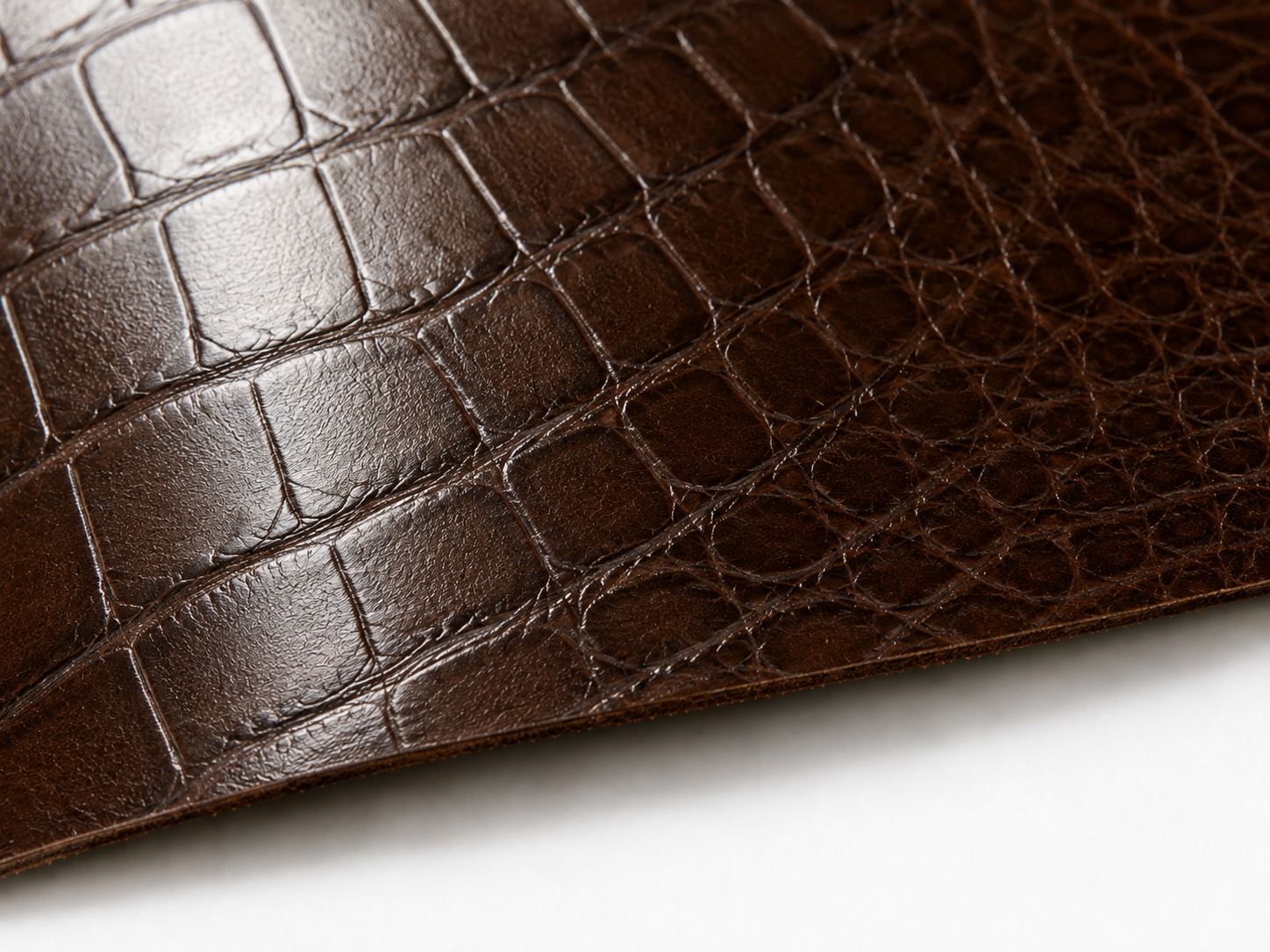
Embossed leather
A pattern or texture is pressed into the surface. It can be a regular pattern or one that imitates crocodile, snake or lizard skin, for example. A well-known example is Saffiano with its fine crosshatch pattern.
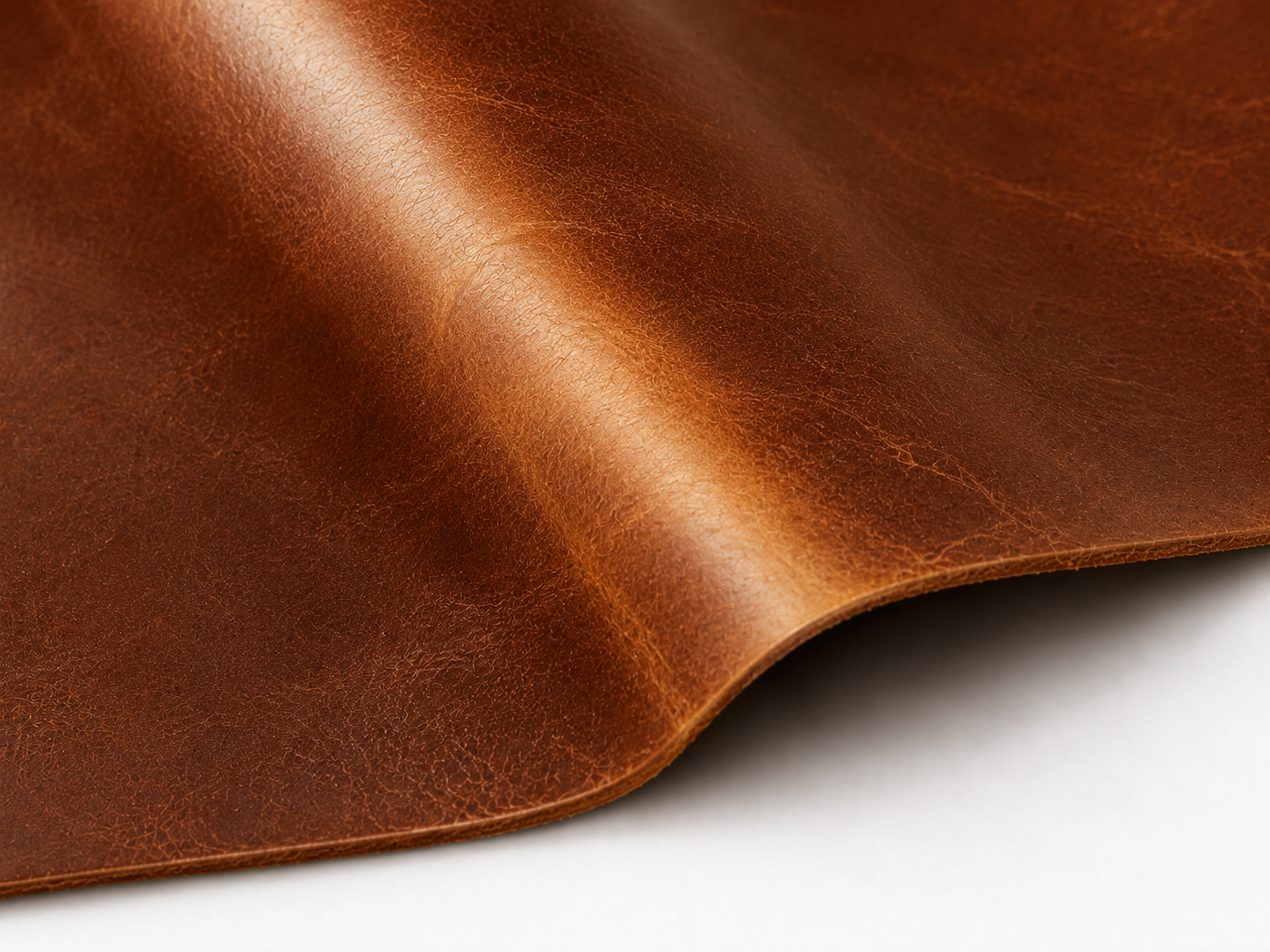
Pull-up leather
It is impregnated with a larger amount of waxes and oils. When you bend, stretch or scratch it, the oils in the material shift and the surface lightens in that spot, which gives it the typical vintage look and a distinctive patina. It is used, for example, for satchels, backpacks, wallets, footwear and other small leather goods.
Buffed leathers with a velvety surface
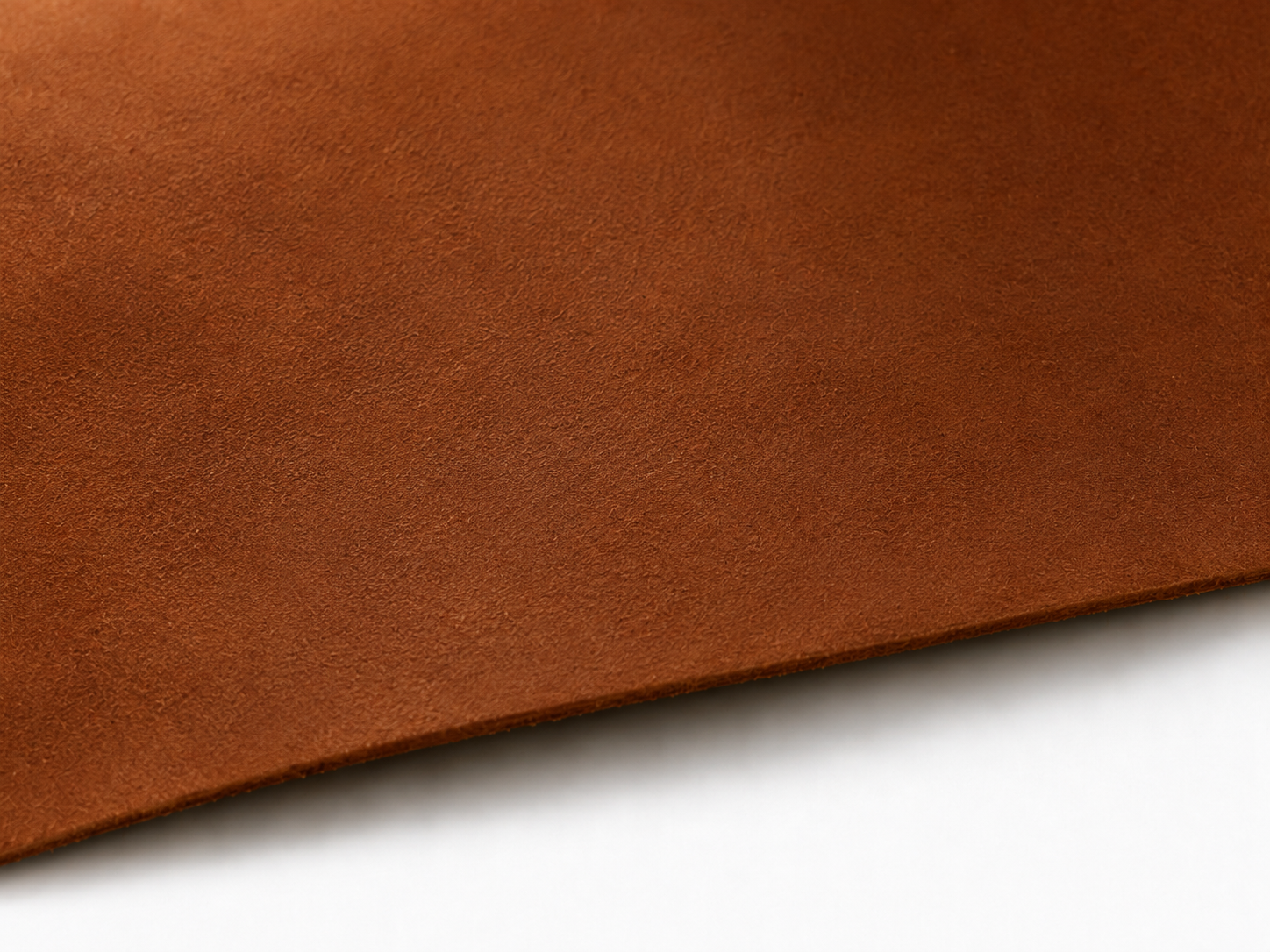
Nubuck
Nubuck is made by lightly buffing the grain side of the leather. It has a very short, fine nap, and the natural grain remains part of the material.
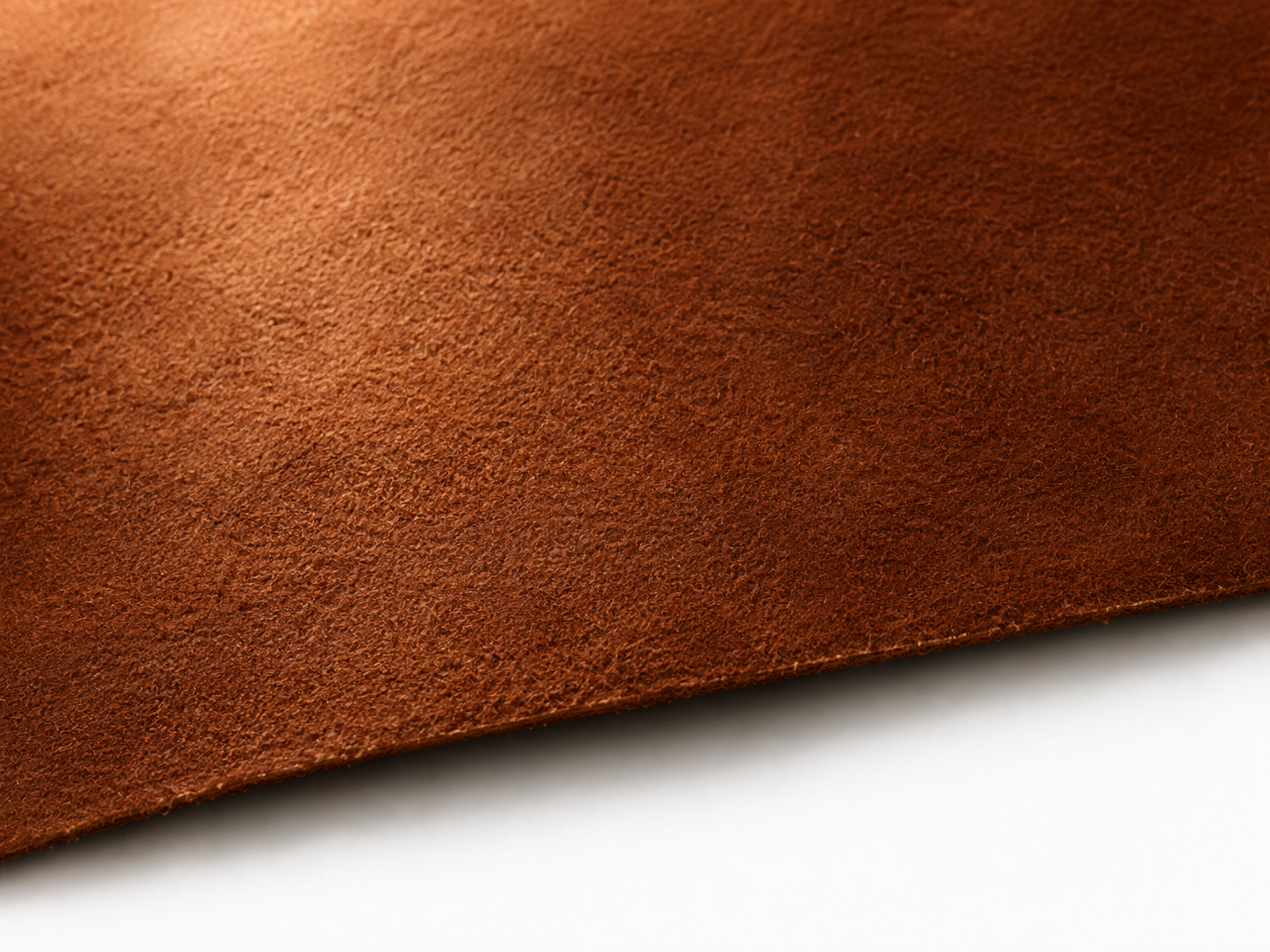
Suede
Suede is made by buffing the flesh side of grain leather or the surface of a split. Its nap is usually longer and more pronounced than on nubuck.
Soft, supple leathers
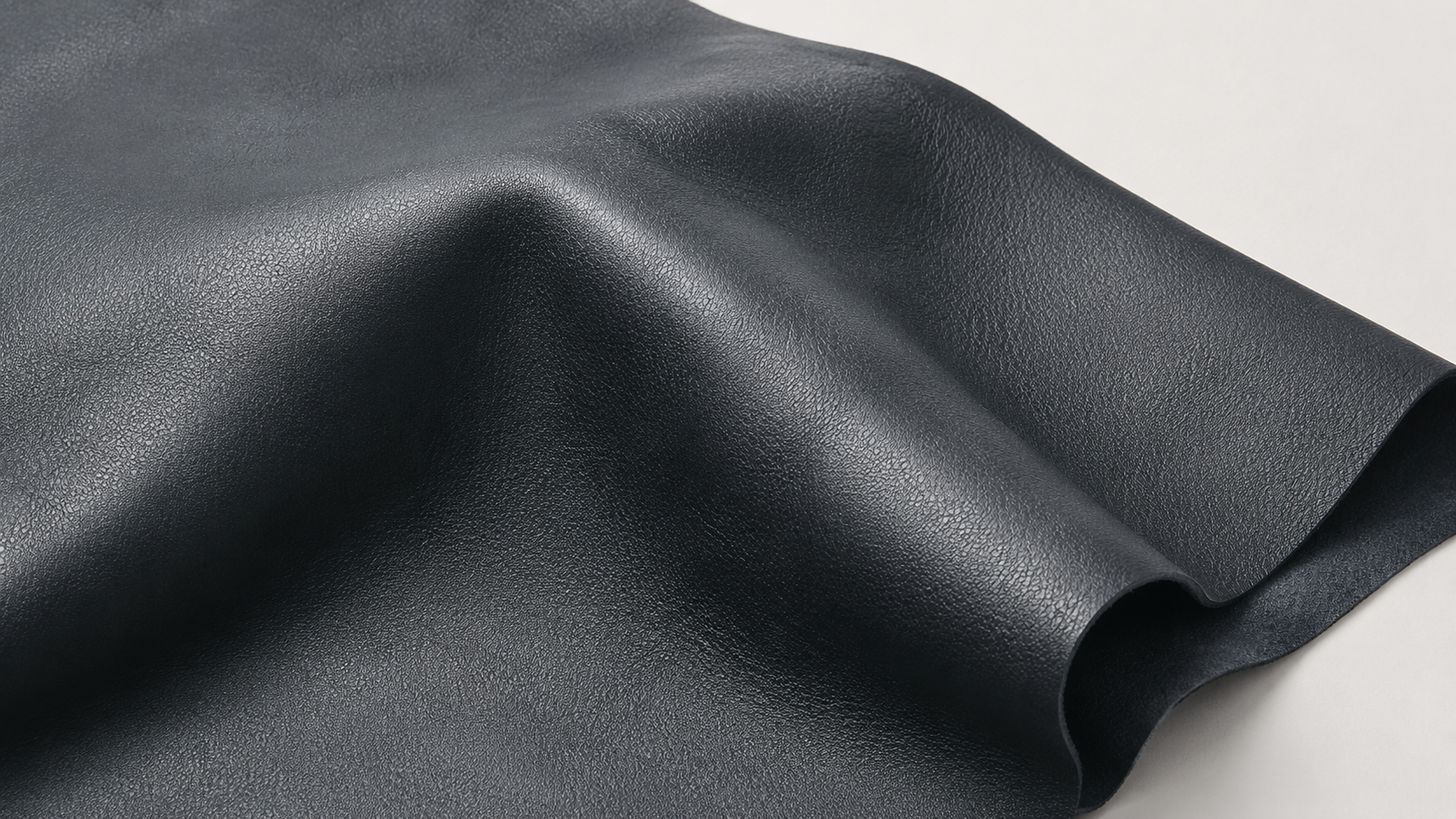
Nappa
Nappa is a very soft, fine and supple grain leather with a smooth surface and a pleasant feel. It is made from various types of hide, often lambskin, sheepskin, goatskin or calfskin, but also cowhide. It is used mainly for gloves, clothing, handbags, footwear, upholstery and car interiors.
The term nappa does not describe one exact tanning method or a specific animal. It mainly expresses the fineness, softness and suppleness of the finished leather.
Traditional and well-known trade names
Some leather names do not describe just one property, such as the tanning method or the surface finish. They combine the origin of the raw material, a specific part of the hide, the processing method, the surface finish and the traditional use. Well-known names include shell cordovan, bridle leather, Crazy Horse and Saffiano.
Shell cordovan
Shell cordovan is an exceptionally dense, smooth and durable material made from a very compact layer of fibers that lies below the surface in the rump area of a horsehide. It is neither ordinary grain leather nor a split. During processing, this layer is gradually exposed, thoroughly tanned, stuffed with fats, thinned and polished.
The surface of shell cordovan has a characteristic deep shine, and when it is bent it usually forms broader rolls rather than many small wrinkles. It is used mainly for footwear, wallets, watch straps and small leather goods.
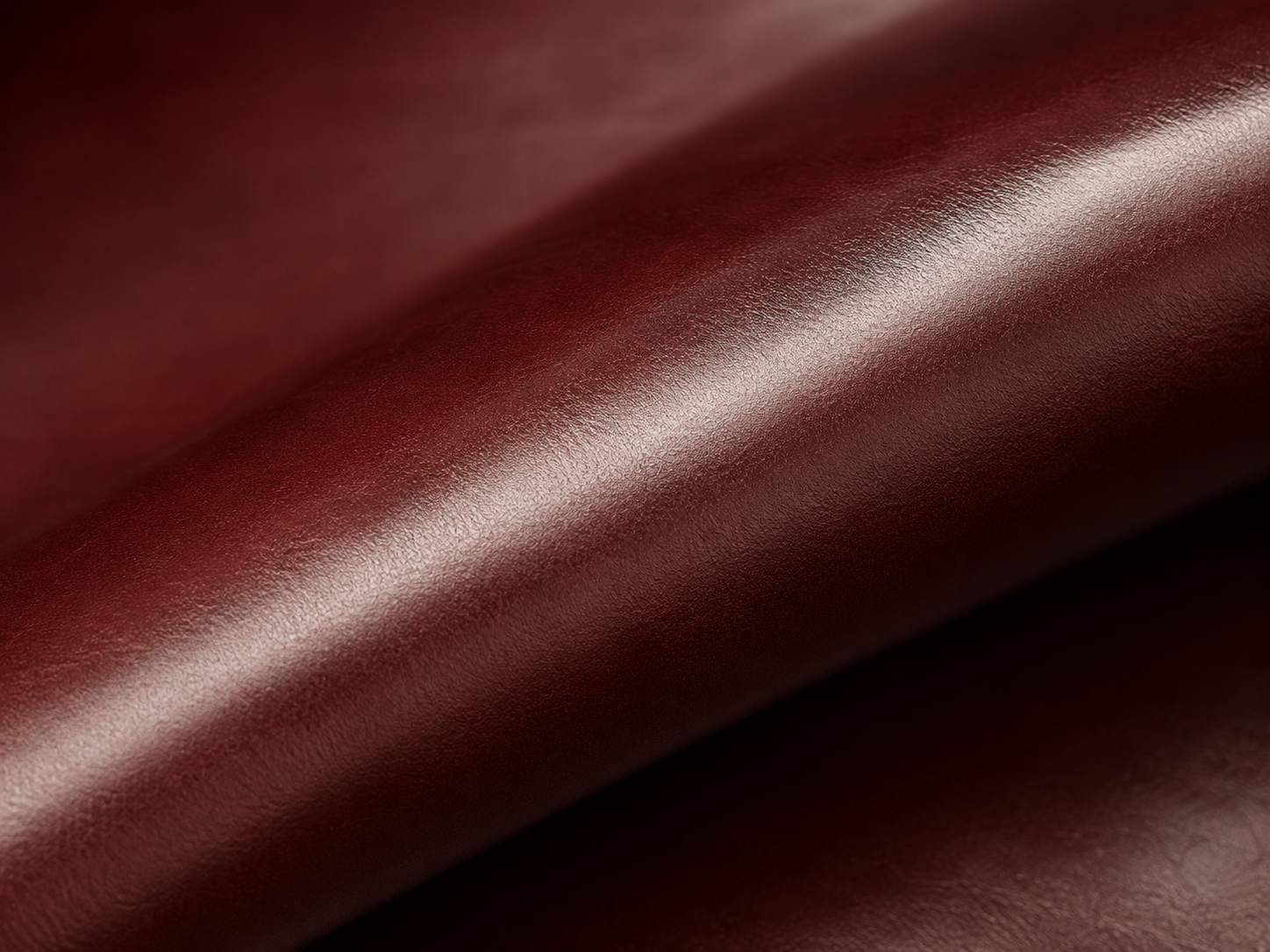
The historical term cordwain does not always mean the same as today’s shell cordovan. In older literature, this name was also used for other finely processed leathers associated with Córdoba in Spain.
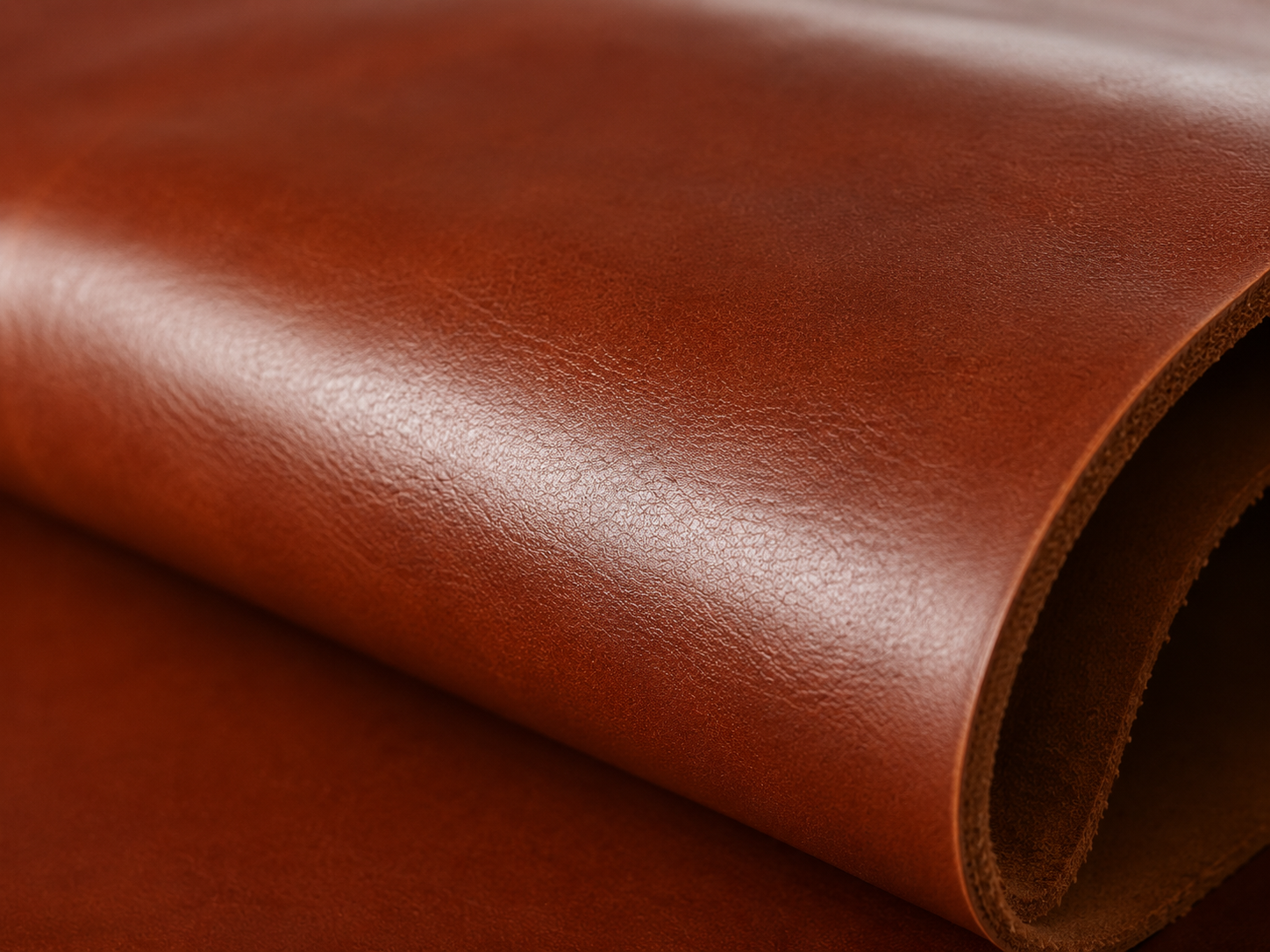
Bridle leather
Bridle leather is a firm, dense, low-stretch vegetable-tanned cowhide that was originally made for bridles, harnesses and other riding equipment. During finishing, it is thoroughly conditioned with oils, fats and waxes that make it more flexible, durable and long-lasting.
A light waxy bloom can appear on the surface, and you can buff it off. Today, bridle leather is also used for belts, satchels, handbags, straps and other sturdy leather goods.
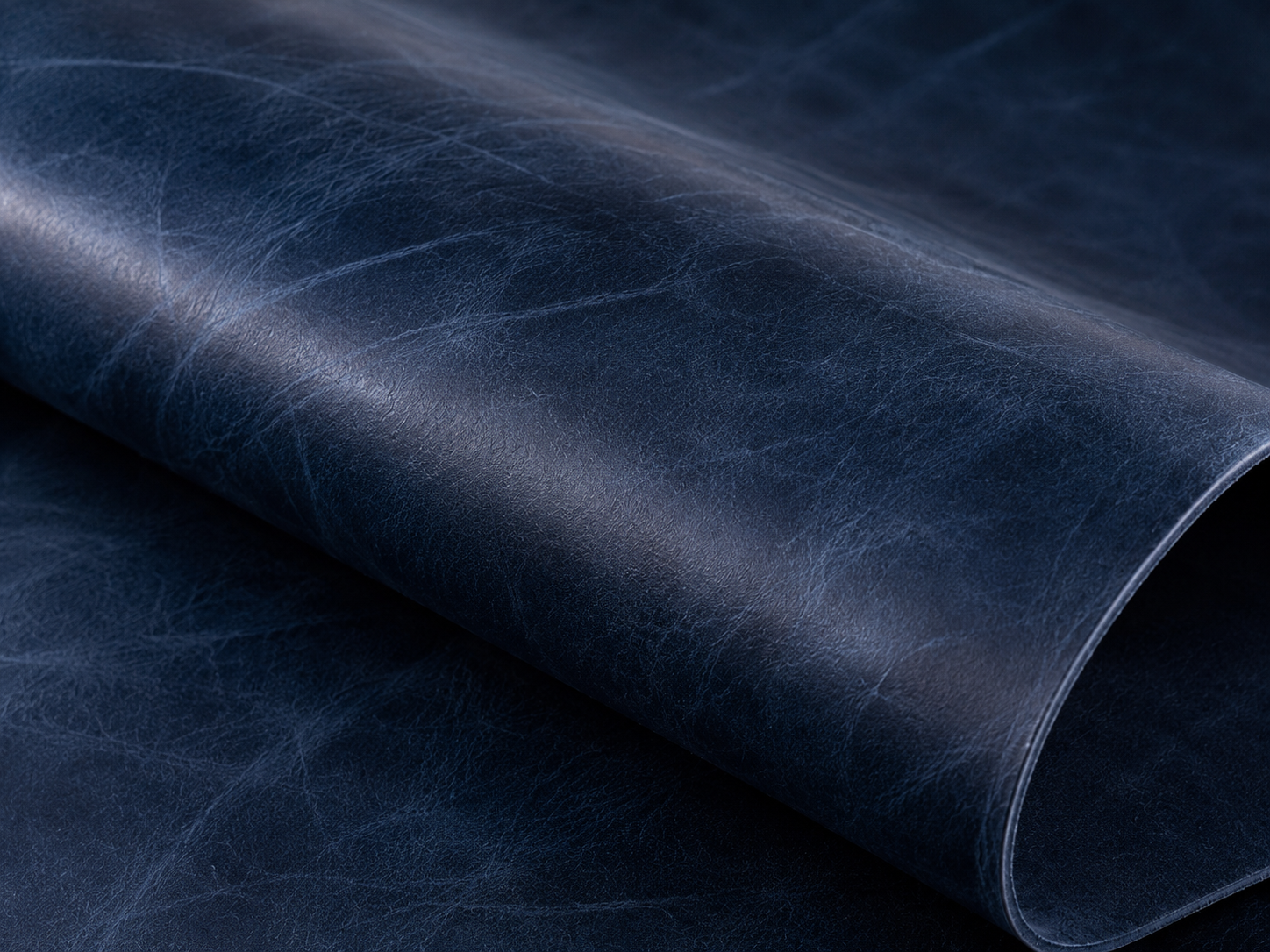
Crazy Horse
Crazy Horse is a well-known trade name for dense pull-up grain leather with a pronounced oiled or waxed finish that lightens where it is bent and gradually develops a characteristic patina.
It is used mainly for satchels, backpacks, wallets, footwear, belts and other leather goods. The name Crazy Horse alone does not stand for one precisely defined production process; the key features are the typical pull-up effect and the way the surface visibly ages.
Saffiano
Saffiano is a well-known name for leather with a characteristic fine crosshatch pattern created by embossing under heat and pressure. The surface usually has a durable protective finish, so it holds its shape well and resists scratches, dirt and moisture better.
The material was made famous mainly by Prada, which uses Saffiano for handbags, wallets and other leather goods. Today, however, the name Saffiano is often also used for other leathers or synthetic materials with a similar crosshatch pattern, which may not match the original material or the way it is made.
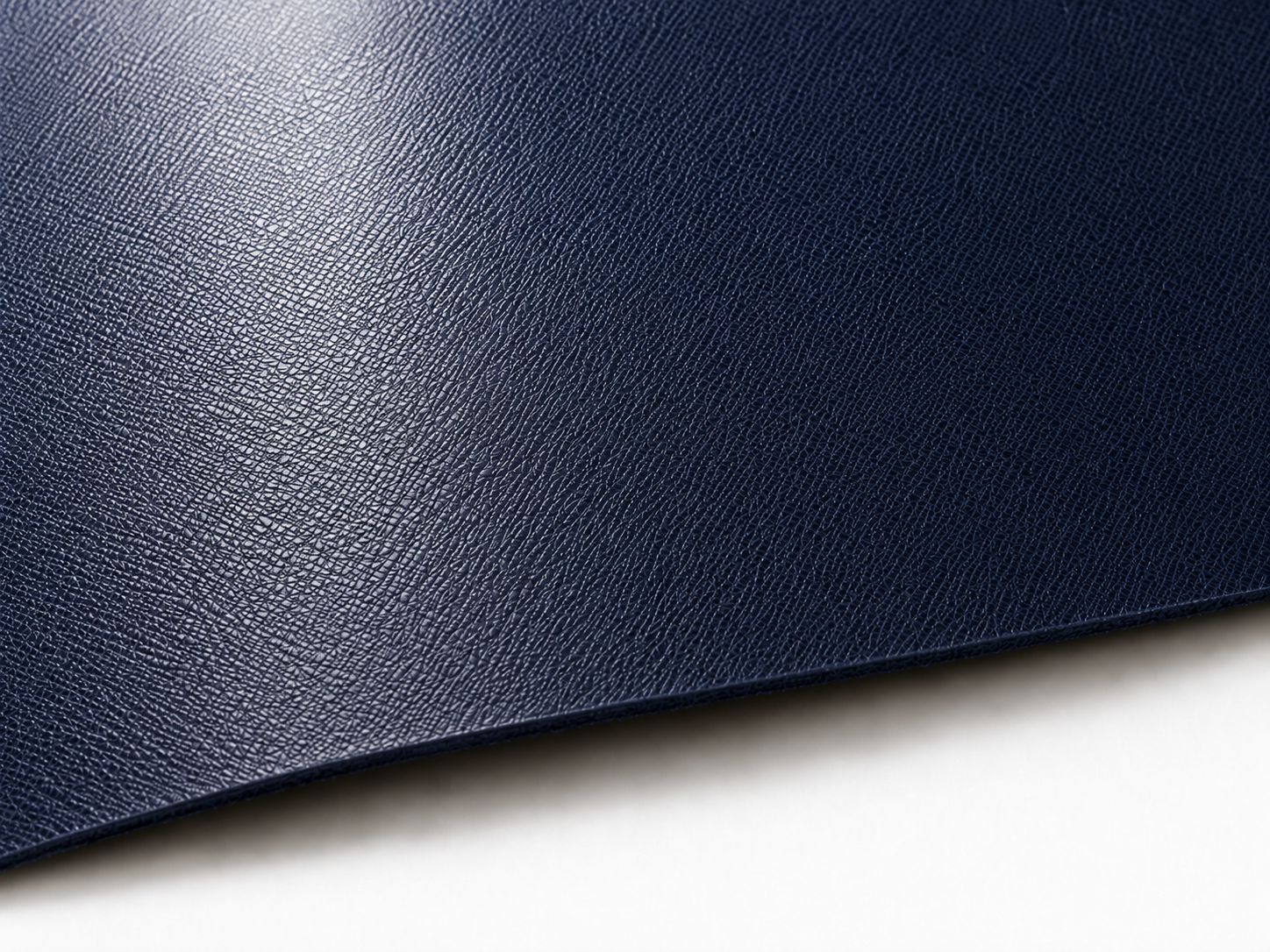
Many tanneries around the world make these types, and their recipes, properties and trade names can differ.
Leather thickness and quality
Thickness
Thickness determines how strong and stiff the leather is and how easy it is to work. Thicker leather holds its shape better and takes more load, so it suits collars, harnesses or holsters. Thin leather bends, sews and molds easily and suits wallets, covers or linings.
We list thickness in millimeters: thin (0.8–1.5 mm), medium (1.6–2.5 mm), thick (2.6–4.0 mm) and extra thick (4.1 mm and more). Many tutorials and shops give it in ounces (oz). For the conversion and recommendations by product, use our leather thickness converter.
As a rough guide by product: wallet 2–4 oz, small collar 5–6 oz, leash 6–8 oz, large collar and belt 7–9 oz, knife sheath and sturdy satchel 8–10 oz, saddle and harness 10–12 oz.
Quality
Leather quality tells you how much of the area is free of visible defects such as scars, scratches or stains (natural marks in leather). Standard quality means 70–89 % of the area is free of defects, the higher grade 90–100 %.
A higher grade means less waste, faster work and a higher price, and it makes sense when you need large, clean pieces. A lower grade is cheaper and makes sense for smaller products, where you can easily cut around the defects.
Which leathers are used in which trades
The terms in this section do not describe an exact tanning method or a specific surface finish. Above all, they tell you which products the leather must have the right properties for. Within one trade, different leathers can therefore be used depending on which part of the product they form and what strain they will be under.
Shoe leathers
Shoemaking uses several different kinds of leather. Each part of a shoe needs different material properties.
- Upper leathers must be supple, strong, flexible and hold their shape. Typical choices are chrome-tanned grain leather, nubuck, suede or softer vegetable-tanned leathers.
- Lining leathers should be thin, soft, breathable, colorfast and pleasant against the skin.
- Sole leathers tend to be thick, stiff and resistant to abrasion. Traditionally, firm vegetable-tanned leathers are used.
- Insole leathers must be breathable, absorbent, hold their shape and withstand long-term load.
- Welt leathers are very strong, stretch very little and are used in traditional welted shoe construction.
Leathers for saddlery, bags and small leather goods
Saddlery, satchels, handbags, belts, cases and other leather goods are made mainly from leathers that match the required strength, look and way of working.
Firm products that need to hold their shape are often made from thicker vegetable-tanned grain leathers. Softer handbags, backpacks or satchels can be made from chrome-tanned, combination-tanned, milled, pull-up or otherwise finished leathers. Saffiano and other embossed leathers are used where a uniform look and a more durable surface are wanted.
Splits are used mainly for more affordable products or for parts that see less strain, auxiliary parts and hidden parts.
Clothing and glove leathers
Clothing leathers must be thin, soft, light, supple and reasonably stretchy. Fine chrome-tanned leathers are often used, such as nappa from lambskin, sheepskin, goatskin, calfskin or soft cowhide.
Glove leathers must be exceptionally fine, flexible, strong and pleasant against the skin. Fine dress gloves are usually made from lambskin, goatskin, sheepskin or other fine leathers. Thicker cowhide or pigskin can be used, for example, for work and protective gloves.
Furniture and automotive upholstery leathers
Upholstery leathers must be soft, supple, large enough and resistant to abrasion, light, dirt and repeated strain.
Seating furniture uses, for example, aniline, semi-aniline and pigmented grain leathers. The types differ in how natural they look, how durable they are and how much care they need.
Car and motorcycle leathers must also cope well with large temperature changes, sunlight, frequent contact and regular cleaning. That is why they are often chrome-tanned and given a durable pigmented and protective finish. They are used for seats, door panels, steering wheels, dashboards and other interior parts.
Alcantara is not leather
Alcantara is not leather. It is a synthetic microfiber material with a fine, suede-like surface that resembles suede or nubuck.
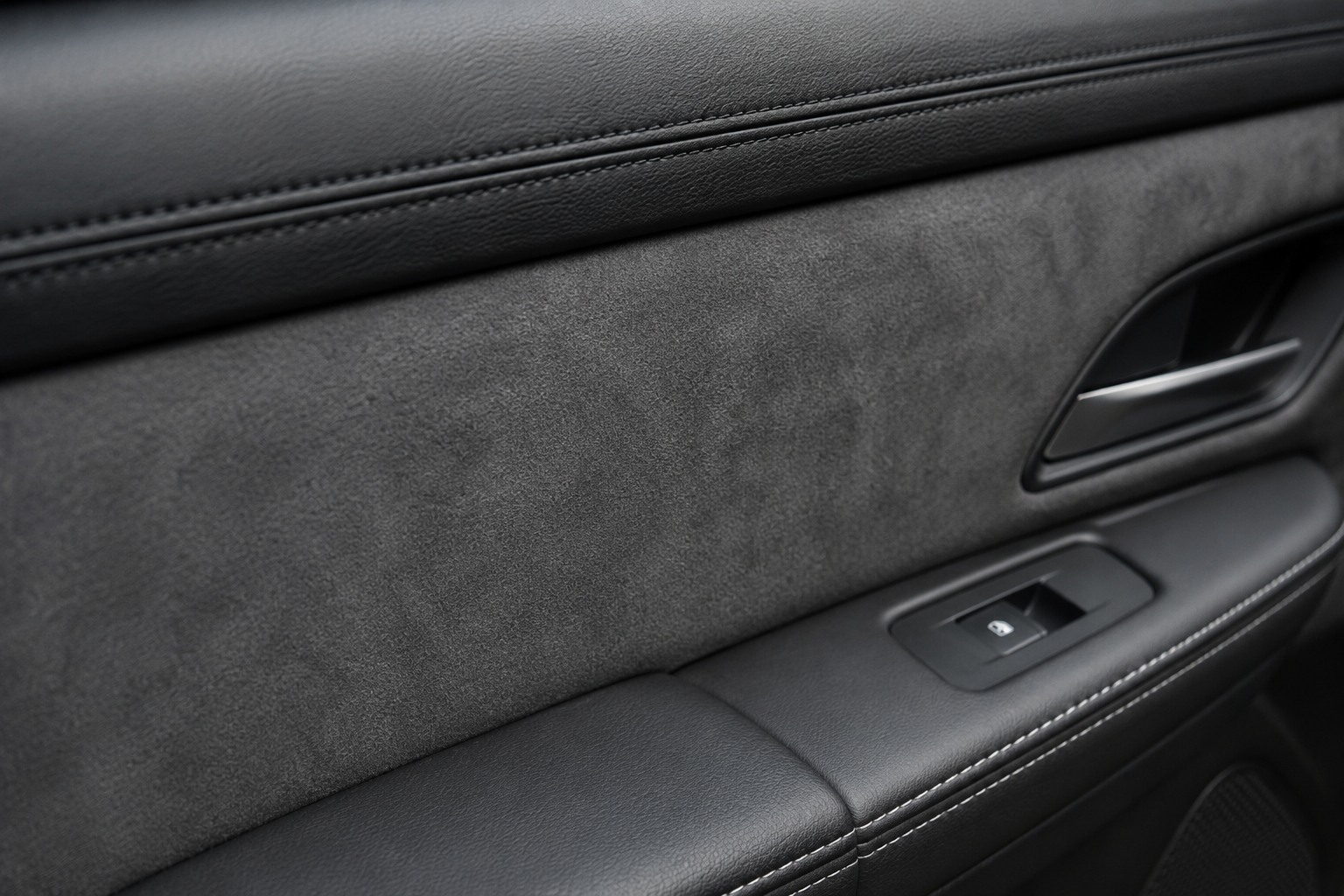
It is made from polyester and polyurethane and is used mainly in car interiors, but also in fashion, furniture, electronics and other fields. It is durable, breathable and washable and gives good grip, so it is often used on steering wheels, seats, dashboards or door panels.
Technical leathers
Technical leathers are intended for products where specific mechanical and functional properties are decisive. They are used, for example, for drive and transmission belts, seals, protective parts, polishing wheels or some machine parts.
Depending on the intended use, they must be exceptionally strong and resistant to tension, abrasion, heat or oils and other substances. They can be vegetable-tanned, chrome-tanned or specially treated.
Have you chosen your leather? You will find cowhide leather in stock in our Cowhide Leather category. If you are going to glue it to another material, check which glue to use for which material.